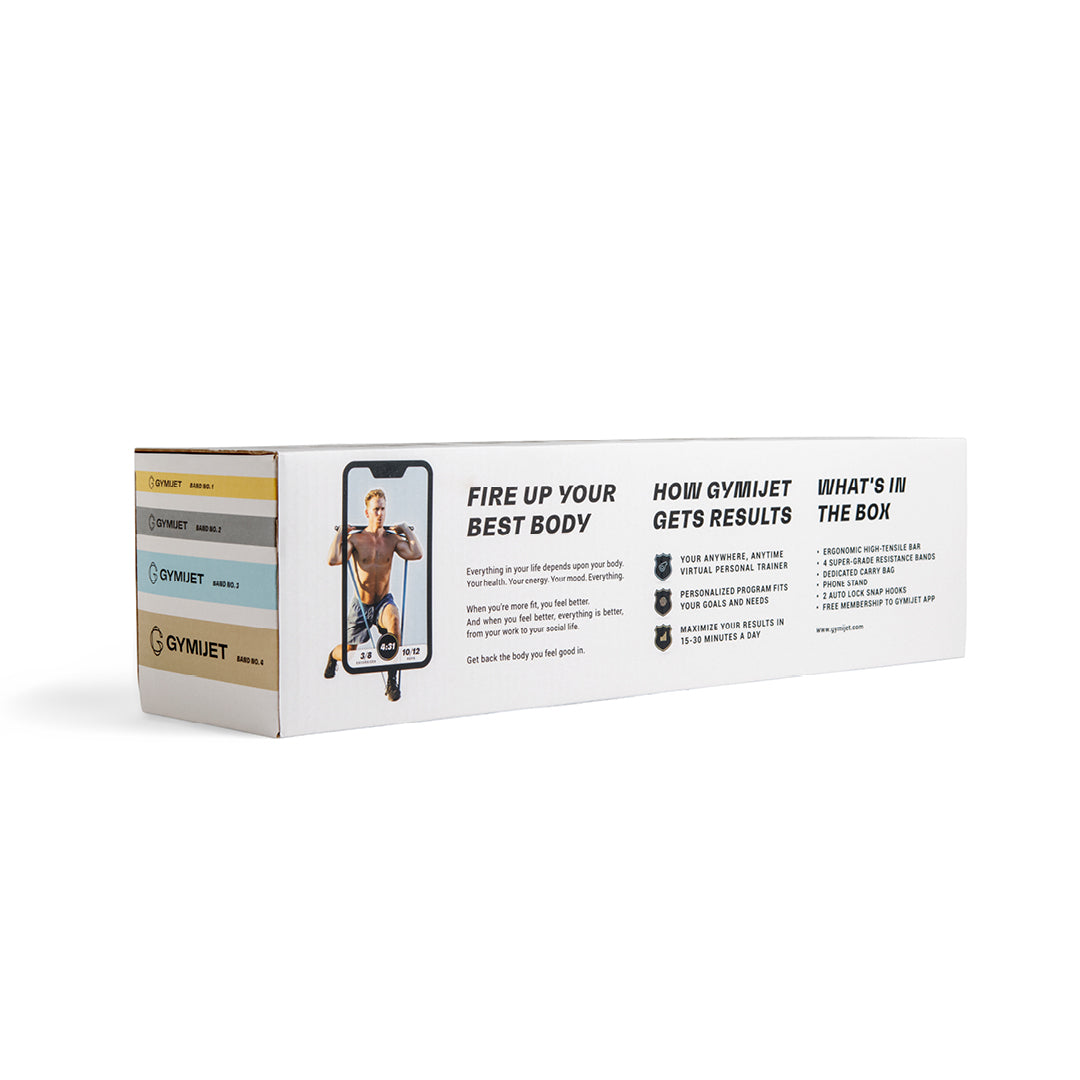
The Future of Fitness: AI-Powered Workouts That Adapt to You
Fitness is experiencing its most significant transformation in decades. The global AI in fitness and wellness market was valued at $9.8 billion in 2024 and is projected to explode to $46.1 billion by 2034—a staggering 16.8% annual growth rate. This isn't hype; it's a fundamental shift in how people train, track progress, and achieve results.
Traditional fitness approaches offer one-size-fits-all solutions. Generic workout plans often overlook your unique physiology, schedule, and individual recovery needs. Personal trainers offer customization, but their services can cost thousands annually and are not available 24/7. Fitness apps flood you with options but lack the intelligence to guide meaningful progress.
Artificial intelligence solves these problems by delivering truly personalized fitness experiences at scale. AI algorithms analyze your sleep quality, energy levels, performance trends, biometrics, and other related real-time data to adjust and refine fitness plans on the go. Unlike static routines, Gymijet's AI fitness system learns from every workout, adapting intensity when your body needs recovery or pushing harder when you're primed for growth.
Discover how Gymijet combines AI intelligence with portable design to create the most adaptive workout experience available.
How Biohackers Are Using AI to Optimize Training
Biohacking, or the practice of using science, technology, and data to optimize human performance, has found its perfect partner in artificial intelligence. Elite athletes and everyday fitness enthusiasts alike are leveraging AI to surpass traditional training limitations and achieve results previously deemed impossible.
The Biohacker's AI Toolkit:
Biohackers don't guess; they measure. AI fitness platforms now integrate with wearables to track heart rate variability (HRV), sleep stages, recovery metrics, glucose levels, and stress markers. This wealth of data becomes actionable through machine learning algorithms that identify patterns invisible to the human eye.
Real-Time Performance Optimization:
Advanced AI systems adjust workouts mid-session based on physiological responses. When your HRV indicates incomplete recovery, the AI pivots to restorative movement. When biomarkers show peak readiness, it unlocks high-intensity protocols designed for maximum adaptation.
Wearable fitness technology has experienced significant growth, with the market reaching $682 billion in 2021 and projected to grow at a 23% annual rate. AI-powered wearable shipments are expected to grow at a 24% annual rate through 2027, with 75% of users citing AI features, such as heart-rate monitoring and sleep tracking, as critical to their experience.
Precision Nutrition Meets Training:
AI doesn't stop at exercise. Biohackers utilize machine learning to synchronize nutrition timing with training demands, adjusting macronutrient ratios according to workout intensity and recovery needs. AI-powered nutrition apps achieve 30% higher adherence rates than traditional diet plans, while reducing incidents of overeating by 25%.
Key Biohacking Applications:
- Recovery prediction – AI forecasts optimal training windows based on sleep quality and stress levels
- Injury prevention – Algorithms detect movement compensation patterns before they cause problems
- Supplement timing – Machine learning optimizes when to consume caffeine, protein, and other performance aids
- Intelligent pacing – Algorithms adjust training plans to increase workout load based on individual training performance
The Gymijet AI system brings biohacker-level optimization to everyone. No need for expensive lab tests or complex tracking, as the AI analyzes your body movement to count your reps only when done properly, and the system optimizes your workout as you go.
Measurable Results:
Biohackers using AI-optimized training report 35-40% faster strength gains compared to traditional programming. Computer vision technology now tracks joint positions, range of motion, and alignment in real-time, providing feedback that rivals in-person coaching.
The biohacking movement demonstrates that combining human intuition with artificial intelligence yields results that neither can achieve alone. When you understand what your body needs and when it needs it, training becomes a precise science.
AI Workout Analysis: Tracking Strength & Progress with Data
Progress tracking separates people who achieve fitness goals from those who spin their wheels indefinitely. But traditional tracking methods like spreadsheets, logbooks, and memory are incomplete, inconsistent, and fail to reveal the insights that drive real improvement.
Artificial intelligence revolutionizes progress tracking by automating data collection, identifying meaningful patterns, and predicting future performance with remarkable accuracy. What once required hours of manual analysis now happens automatically, providing athletes and casual exercisers with insights previously available only to professionals with dedicated coaching teams.
The Problem with Traditional Tracking:
Most people underestimate their rest periods, misremember the weights they lifted, and track their progress inconsistently. They can't see when they're overtraining or undertrained. They miss the subtle signs that predict breakthroughs or injuries. Human memory and manual tracking simply can't capture the complexity of adaptive fitness.
How AI Transforms Data into Progress:
Modern AI fitness platforms automatically log every rep, set, weight, tempo, and rest period. But more importantly, they analyze this data to extract actionable intelligence. Machine learning algorithms identify when you're ready for progressive overload, when you need a deload week, and which exercises drive the most progress for your specific physiology.
Advanced Metrics AI Tracks:
- Volume landmarks – Total weight moved per muscle group across training blocks
- Intensity distribution – Percentage of time spent in different training zones
- Recovery efficiency – How quickly performance rebounds between sessions
- Movement quality scores – Form degradation patterns that indicate fatigue
- Predictive analytics – Forecasting when you'll hit strength milestones
AI virtual trainers reduce training gaps by 40% compared to traditional methods, while AI-based virtual trainers have achieved a 95% satisfaction rate among users. The technology doesn't just track—it interprets, predicts, and prescribes.
Real-Time Feedback Loops:
The best AI systems don't wait until after your workout to provide insights. They analyze form and performance during exercises, offering immediate corrections. Smart mirrors and AI-enabled home gyms, such as Tempo, utilize 3D sensors and HD screens to provide real-time feedback on form, tempo, and posture during movement.
The Compound Effect of Better Data:
When you identify the variables that drive results, such as exercise selection, rep ranges, rest periods, and training frequency, you can manipulate them strategically to achieve your goals. Over months and years, this data-driven approach compounds into dramatically better results.
Gymijet's system automatically tracks your training, identifies trends, and adjusts programming to keep you progressing. No manual logging, no guesswork, just intelligent tracking that makes every workout more effective than the last.
Progress isn't linear, but with AI analysis, it becomes visible, measurable, and predictable. The data doesn't lie, and the insights it reveals accelerate results exponentially.
AI vs Traditional Personal Trainers: Which is Better?
Not everyone has the time to coordinate schedules with a personal trainer or the budget to pay premium hourly rates. Yet personalized fitness guidance remains crucial for achieving real results. This is where AI-powered systems like Gymijet are changing the game.
While traditional trainers provide valuable hands-on coaching, they come with significant barriers—scheduling conflicts, high costs, and limited availability. Gymijet's AI system delivers personalized programming and form correction when you need it, at a fraction of the cost. It's not about replacing human trainers entirely; it's about making professional-level fitness guidance accessible to everyone.
Traditional Personal Trainers: Strengths & Limitations
Strengths:
- Hands-on form correction and physical assistance
- Accountability through scheduled sessions
- Human motivation and emotional support
- Expertise in complex movement patterns
- Adaptive real-time coaching based on subtle cues
Limitations:
- Cost $60-150+ per session, $3,000-7,500+ annually for 2x weekly training
- Schedule constraints and travel time to gym
- Quality varies dramatically between trainers
- Can't track you 24/7 or analyze data between sessions
- Limited scalability—one trainer can only help so many clients
Jobs in personal training and fitness instruction are expected to increase by 24% in coming years, demonstrating continued demand for human expertise in fitness coaching.
AI Personal Trainers: Strengths & Limitations
Strengths:
- Available 24/7 regardless of location or schedule
- Costs less than $10-50/month, 95% cheaper than traditional training
- Consistent quality based on proven algorithms
- Analyzes data continuously, adjusting plans daily
- Scales to millions while maintaining personalization
- No ego, judgment, or bad days
Limitations:
- Can't physically spot you during exercises
- Limited ability to read subtle non-verbal cues
- Lacks human empathy and emotional intelligence
- Requires self-motivation and discipline
- Best for people comfortable with technology
The Hybrid Future:
Forward-thinking trainers are incorporating AI into their practice rather than competing against it. They utilize AI to analyze client data between sessions, optimize programming, and track progress, enabling them to focus on what humans do best: providing motivation, accountability, and hands-on coaching.
60% of fitness app users rely on AI-powered virtual trainers weekly, with interactive AI trainers improving user engagement by 50%. Meanwhile, 60% of dieticians now use AI to create personalized meal plans, demonstrating how professionals enhance their services with intelligent technology.
Who Should Choose AI Training:
- Budget-conscious fitness enthusiasts
- Frequent travelers and digital nomads
- Self-motivated individuals comfortable with technology
- People seeking consistent, data-driven programming
- Those with variable schedules incompatible with appointment-based training
Who Should Choose Traditional Training:
- People new to fitness needing foundational movement education
- Those struggling with motivation and accountability
- Individuals recovering from injuries requiring hands-on guidance
- Athletes preparing for specific competitions
- People who prioritize human connection in their fitness journey
Gymijet combines the best of both worlds: AI-powered personalization, community support, and expert-designed programming. You get intelligent adaptation at AI pricing with workout quality that rivals premium training.
The Rise of Smart Workout Equipment in 2025
Walk into any gym in 2025 and you'll notice something different. Equipment now talks back. Mirrors provide real-time form analysis. Dumbbells track every rep. Bikes adjust resistance based on your heart rate. The fitness hardware revolution is here, and it's powered by artificial intelligence.
The smart fitness equipment market has experienced significant growth, driven by technological advancements and increasing consumer demand for personalized experiences. Digital fitness tools have grown more than 30% since 2021, with home fitness equipment searches spiking 100% during peak seasons.
What Makes Equipment "Smart"?
Smart workout equipment integrates sensors, connectivity, and AI to transform traditional gear into intelligent training partners. These devices collect data, provide feedback, adjust difficulty, and sync with apps to create comprehensive training ecosystems.
Categories of Smart Equipment:
1. Smart Cardio Machines Peloton bikes, Tonal strength trainers, and connected rowers use AI to adjust workouts in real-time based on performance metrics. They offer live and on-demand classes, track progress over time, and compete with other users globally.
2. AI-Enabled Mirrors Mirror-based fitness systems like Tempo use 3D sensors and AI-powered form tracking to guide users through movement and mobility workouts. Prototype devices unveiled at CES 2025, like the Withings smart mirror, use integrated sensors to assess body composition, heart and lung function, and nutrition trends each morning.
3. Intelligent Wearables Smart rings, watches, and patches track activity, heart health, sleep quality, and recovery metrics. Unlike traditional wearables that passively collect stats, new platforms like WHOOP Coach translate complex physiological signals into direct, actionable guidance powered by AI.
4. Connected Resistance Equipment Smart dumbbells with digital displays track workouts and progress. Resistance bands with integrated sensors measure force output. Multi-functional home gyms like Amp and Gym Monster 2 utilize AI to monitor form and provide personalized suggestions.
The Portable Revolution:
While large smart equipment dominates headlines, the biggest innovation in 2025 is making intelligence portable. Consumers want smart features without sacrificing space or mobility. AI fitness apps expected to surpass $23.98 billion by 2026 are driving this shift toward software-first solutions.
Gymijet represents the next evolution: AI coaching that travels with you without requiring expensive connected equipment. The intelligence lives in your phone, while simple resistance tools provide the physical stimulus. Smart without the bulk, personalized without the price tag.
Key Benefits of Smart Equipment:
- Form correction – Real-time feedback prevents injury and improves results
- Progressive overload automation – AI adjusts difficulty to maintain optimal challenge
- Motivation through gamification – Compete with others, earn achievements, track streaks
- Comprehensive data – See exactly how each workout contributes to long-term progress
- Space efficiency – Home solutions eliminate gym commutes
Considerations Before Buying:
- Subscription costs – Many smart devices require ongoing monthly fees beyond initial purchase
- Space requirements – Large equipment limits flexibility and portability
- Technology dependence – Software issues can make equipment unusable
- Obsolescence risk – Hardware becomes outdated as AI capabilities advance
Discover the latest smart workout equipment →
The Science of AI Movement Analysis in Workouts
Proper form separates effective training from wasted time and potential injury. For decades, only athletes with access to biomechanics labs or hands-on coaching received detailed movement analysis. Today, computer vision and machine learning bring laboratory-grade form assessment to anyone with a smartphone.
AI movement analysis represents one of the most practical applications of artificial intelligence in the fitness industry. By tracking joint positions, analyzing range of motion, and detecting compensation patterns, these systems provide feedback that rivals expert coaching—instantly, consistently, and at scale.
How AI "Sees" Your Movement:
Computer vision algorithms use your device's camera to create a skeletal model of your body in real-time. They track 20-30 key points, like the shoulders, elbows, wrists, hips, knees, and ankles, analyzing their positions relative to each other throughout the exercise.
Machine learning models trained on thousands of properly executed exercises compare your movement patterns against ideal biomechanics. When deviations occur, like rounding your back during deadlifts, letting knees cave during squats, and arching excessively during push-ups, the AI provides immediate correction cues.
The Technology Behind Form Analysis:
1. Computer Vision Processing: Algorithms identify your body in the frame, separate you from background elements, and map joint locations frame by frame. This happens 30-60 times per second, creating a detailed movement profile.
2. Biomechanical Modeling: AI compares your joint angles, movement velocities, and ranges of motion against optimal patterns. It accounts for individual differences—limb lengths, flexibility limitations, previous injuries—to provide personalized feedback.
3. Real-Time Feedback Generation: Based on detected deviations, the system generates specific cues: "Keep chest up," "Push knees out," "Control the descent." Timing matters—the AI delivers corrections precisely when they're needed.
4. Progressive Learning: The AI learns your movement capabilities over time. Initial corrections address major form breaks. As technique improves, it refines coaching to address subtle inefficiencies that unlock advanced performance.
Measurable Benefits:
AI-enhanced virtual platforms improve instructional accuracy by 25% compared to unassisted training. Smart mirrors and AI-enabled home gyms offer instant feedback during reps, including reminders to maintain proper posture. Physical therapy apps ensure users perform recovery exercises correctly and safely at home.
Applications Across Fitness Disciplines:
- Strength training – Monitors bar path, joint angles, tempo, and range of motion during lifts
- Yoga and mobility – Assesses alignment, balance, and holds in stretching positions
- HIIT and cardio – Tracks movement quality during high-speed exercises
- Rehabilitation – Ensures proper execution of therapeutic exercises to prevent re-injury
- Sports-specific training – Analyzes technique in activities like golf swings, tennis serves, and running gait
Limitations and Considerations:
AI movement analysis works best with clear camera angles and adequate lighting. Complex multi-planar movements can challenge tracking accuracy. The technology excels at detecting obvious form breaks but may miss subtle compensations that experienced human coaches would catch.
Gymijet's AI movement analysis works on any smartphone or tablet, providing professional-grade form feedback without the need for expensive equipment. The system adapts to your skill level, offering foundational cues for beginners and advanced refinements for experienced athletes. When used correctly, it accelerates learning, prevents injury, and unlocks performance improvements previously accessible only to elite athletes.
How AI Personal Trainers Work: Benefits & Limitations
AI personal trainers represent the most significant fitness innovation since the advent of gym memberships. These systems leverage machine learning, data analysis, and adaptive algorithms to provide personalized coaching at scale.
But how do they actually work? What happens behind the scenes when an AI generates your workout, adjusts difficulty mid-session, or recommends a recovery day? Understanding the mechanisms reveals both the remarkable capabilities and inherent limitations of artificial intelligence in fitness.
The Core Components of AI Training Systems:
1. Data Collection Infrastructure: AI trainers gather information from multiple sources: workout history, performance metrics, user feedback, wearable device data, sleep quality, stress levels, and stated goals. This comprehensive data forms the foundation for personalization.
2. Machine Learning Models: Algorithms trained on millions of workout sessions identify patterns between training variables and outcomes. They learn what programming approaches work for different body types, experience levels, and goal sets—then apply these insights to individual users.
3. Adaptive Programming Engines: Unlike static workout plans, AI systems adjust programming based on your progress. If you're crushing workouts, intensity increases. If recovery markers indicate fatigue, volume decreases. The AI continuously optimizes the training stimulus.
4. Natural Language Interfaces: Modern AI trainers use conversational interfaces powered by large language models. You can ask questions like "Should I train today?" or "Why was my sleep bad?" and receive tailored recommendations based on your physiological data.
The Personalization Process:
When you first use an AI trainer, it assesses your current fitness level through baseline tests or questionnaires. It learns your available equipment, time constraints, injury history, and preferences. This profile guides initial programming.
As you train, the AI refines its understanding. It notices you're stronger on certain exercises, recover faster after specific workouts, and respond better to particular training splits. Machine learning algorithms detect these patterns and adjust accordingly.
Key Benefits of AI Personal Training:
- Accessibility – Available 24/7 from anywhere, eliminating scheduling and location barriers
- Consistency – Delivers quality coaching without human variability or off days
- Scalability – Serves unlimited users while maintaining personalization
- Data-driven optimization – Analyzes performance continuously, making micro-adjustments that humans can't
- No judgment or intimidation – Provides a pressure-free environment for beginners
Inherent Limitations:
- Lacks physical presence – Can't spot you during heavy lifts or provide hands-on corrections
- Reduced accountability – Self-discipline required without scheduled appointments
- Limited emotional intelligence – Can't detect discouragement, frustration, or loss of motivation through subtle cues
- Technology dependence – Requires devices, connectivity, and comfort with digital interfaces
- Standardized responses – May not capture unique situations requiring human judgment
The Integration Trend:
Personal trainers utilize AI to analyze client data and refine their programming. Gym chains are integrating AI movement analysis into their equipment. Boutique studios offer AI-enhanced classes.
AI virtual trainers have achieved a 95% satisfaction rate among users, with 60% of fitness app users relying on them on a weekly basis. Interactive AI trainers improve user engagement by 50% and increase retention rates by 32%.
Gymijet's approach combines AI intelligence with human-centered design. The system handles data analysis, programming, and adaptation automatically, while you focus on the human elements: motivation, consistency, and celebrating progress.
Understanding how AI personal trainers work helps you use them effectively. They excel at pattern recognition, data processing, and consistent delivery. They struggle with context that requires human judgment. Used correctly, they provide professional-grade coaching at consumer-friendly prices.
Learn how AI personal trainers work →
Why Gymijet Leads the AI Fitness Revolution
The AI fitness market is crowded with apps, platforms, and connected equipment. Most deliver on basic promises: workout tracking, exercise libraries, and basic personalization. Few truly harness artificial intelligence to create adaptive, intelligent training experiences. Gymijet stands apart.
What Makes Gymijet Different:
1. Truly Adaptive Programming: Most "AI" fitness apps use basic algorithms that adjust difficulty based on simple rules. Gymijet employs advanced machine learning that analyzes patterns across your entire training history, identifying subtle trends that predict when you're primed for progress or need recovery.
2. Portable Intelligence: While competitors require expensive connected equipment or gym memberships, Gymijet delivers AI coaching through your smartphone. The intelligence is in the software, not specialized hardware. Train anywhere—hotel rooms, parks, home offices—with the same personalized experience.
3. No Equipment Required: The Gymijet fitness app provides comprehensive body-weight routines that adapt to your space constraints and available equipment. Have resistance bands? Great. Don't? No problem. The AI adjusts exercises to match your situation.
4. Real-Time Form Analysis: Using computer vision technology, Gymijet tracks your movement during exercises and provides instant feedback. This isn't post-workout analysis—it's live coaching that corrects form breaks as they happen, preventing injury and maximizing effectiveness.
5. Holistic Performance Tracking: Gymijet doesn't just track reps and sets. It monitors workout consistency, recovery quality, energy levels, and progress toward goals. The AI synthesizes this data to make intelligent programming decisions that account for your complete fitness picture.
6. Community-Powered Motivation: AI handles the technical coaching, but humans provide the motivation. Gymijet connects you with other users, enabling workout challenges, progress sharing, and accountability partnerships. Technology powers the training; community sustains the consistency.
7. Premium Coaching at Consumer Prices: At a fraction of traditional personal training costs, Gymijet delivers programming quality that rivals $100+/session coaches. The AI never has a bad day, never shows up late, and never stops learning how to serve you better.
The Numbers Behind Gymijet's Effectiveness:
Users report 35-40% faster progress compared to generic workout plans. Form analysis reduces the risk of injury while improving exercise effectiveness. Adaptive programming eliminates plateaus that derail most fitness journeys.
The complete Gymijet system combines AI intelligence with portable equipment designed for modern life. Whether you're a biohacker optimizing performance, a professional seeking efficient training, or a beginner needing intelligent guidance, Gymijet delivers.
Frequently Asked Questions
How does AI make workouts more effective than traditional programs?
AI continuously analyzes your performance data to identify what's working and adjust what isn't. Traditional programs often struggle to adapt to your unique response patterns, recovery needs, or changing circumstances. AI personalizes programming at a level human coaches achieve only with 1-on-1 clients, making every workout optimally challenging without being overwhelming.
Can AI really provide form feedback as well as a human trainer?
Modern computer vision technology tracks 20-30 joint positions in real-time, detecting form breaks humans might miss. AI-enhanced platforms improve instructional accuracy by 25% and provide instant corrections during exercises. While AI can't physically adjust your positioning, it offers consistent, immediate feedback that prevents form degradation and reduces the risk of injury.
Is AI fitness technology only for tech-savvy people?
No. Modern AI fitness apps are designed for all experience levels. The AI handles complexity behind the scenes. You just follow the workout displayed on screen. If you can use a smartphone for basic tasks, you can use AI fitness platforms. The technology makes fitness simpler, not more complicated.
How much does AI personal training cost compared to traditional training?
AI training typically costs $10-50/month, while traditional personal training runs $60-150 per session ($3,000-7,500+ annually for twice-weekly training). You get consistent, data-driven coaching at 95% lower cost. The savings allow you to invest in other wellness areas, such as nutrition, recovery tools, or high-quality equipment.
Will AI replace human personal trainers?
Unlikely. AI and human trainers serve complementary roles. AI excels at data analysis, consistent programming, and 24/7 availability. Human trainers provide hands-on corrections, emotional support, and nuanced judgment for complex situations. The future is hybrid—trainers using AI tools to enhance their coaching while providing the human elements AI can't replicate.
Can beginners effectively utilize AI fitness systems?
Absolutely. AI systems start with foundational movements and gradually build complexity as you develop strength and confidence. The technology provides detailed exercise demonstrations, form cues, and progressive difficulty increases that guide beginners safely. Many users find AI training less intimidating than gym environments or in-person training.
What data does AI need to personalize workouts?
Basic systems require consideration of age, fitness level, available equipment, and specific goals. Advanced platforms like Gymijet integrate workout performance, recovery metrics, energy levels, and injury history. More data enables better personalization, but AI can provide value with minimal input. The system learns continuously, refining recommendations as you train.
The Smart Choice: Embrace AI-Powered Fitness Today
Fitness is no longer about following generic programs and hoping for results. The AI revolution has made personalized, adaptive training accessible to everyone, not just elite athletes with coaching teams and biomechanics labs.
You can continue with guesswork, following random workouts, wondering why progress stalls, and struggling with inconsistency. Or you can leverage artificial intelligence to transform every workout into a step toward your goals, backed by data analysis and adaptive programming that rivals elite coaching.
Gymijet delivers the most advanced AI fitness experience available, combining intelligent programming with portable equipment and community support. No expensive connected equipment required. No gym memberships needed. Just intelligent training that adapts to your life, goals, and capabilities.
The future of fitness is working smarter. AI handles the complexity, you bring the effort. Together, they produce results that neither traditional training nor willpower alone can match.
Experience AI-powered workouts with Gymijet today. Your transformation starts with a single decision: embrace technology that makes fitness more effective, efficient, and accessible than ever before. The intelligence is ready. The system is proven. The only question is: are you ready to train smarter?


Reviewed by
Dr. Michele Kong, MD, MBA
Pediatric Critical Care Medecine
Dr. Michele Kong is a Professor and physician scientist who specializes in pediatric intensive care and clinical research on severe respiratory illnesses and sensory integration challenges. She has extensive experience in evidence-based medicine and child wellness, bringing both a scientific and compassionate perspective to the importance of health, movement, and adaptive fitness—core values reflected in Gymijet’s mission.
Beyond her medical and academic career, Dr. Kong is the co-founder of KultureCity, a leading nonprofit dedicated to creating inclusive and sensory-accessible environments worldwide. Her work has earned national recognition for advancing accessibility, community health, and neurodiversity awareness.
Dr. Kong’s multidisciplinary background connects clinical expertise with human-centered innovation. Her insights help make health and fitness more inclusive, data-driven, and sustainable. Her contributions to Gymijet’s content ensure every article aligns with the highest standards of credibility, research integrity, and real-world applicability, allowing readers to be more empowered in pursuing smarter, safer, and more personalized approaches to wellness.