How AI Personal Trainers Work: Benefits & Limitations
Imagine having a personal trainer who's available 24/7, never gets tired, remembers every single rep you've ever done, and costs a fraction of the cost of traditional training sessions. Sounds too good to be true? That's exactly what AI personal trainers promise to deliver. From analyzing your form in real-time to generating adaptive workout plans that evolve with your progress, artificial intelligence is revolutionizing how people approach fitness.
But can an algorithm truly replace the human touch of an experienced trainer? As AI fitness technology rapidly advances, understanding how these systems work and their current limitations is crucial for anyone considering this modern approach to training. The global AI fitness market is projected to reach $4.8 billion by 2028, with AI-powered apps experiencing three times higher user engagement compared to traditional fitness applications.
In this comprehensive guide, we'll explore the technology behind AI personal trainers, their significant benefits, and honest limitations, helping you determine whether Gymijet's AI-powered portable gym is the right fit for your fitness journey.
How AI Personal Trainers Actually Work
The Technology Stack Behind AI Fitness
AI personal trainers are sophisticated systems built on three core technologies working in harmony.
Computer Vision and Pose Estimation
At the heart of every AI personal trainer lies computer vision technology that "sees" your movements through your device's camera. Using pose estimation models like MediaPipe, BlazePose, or OpenPose, the system identifies and tracks 17-33 key points on the body, such as the shoulders, elbows, wrists, hips, knees, and ankles. These algorithms analyze the spatial relationships between these points to understand your body position in real-time.
Think of it like digital skeleton tracking. The AI creates a virtual wireframe of your body, measuring joint angles and movement patterns frame by frame. When you perform a squat, it calculates knee angle, hip depth, spine alignment, and weight distribution, all within milliseconds.
Machine Learning for Pattern Recognition
Once the AI "sees" your movement, machine learning algorithms determine what you're doing and how well you're doing it. These systems have been trained on millions of workout videos, learning what correct form looks like versus common mistakes.
For example, Gymijet's fitness app utilizes intelligent rep counting, which only registers movements performed with proper technique. If your squat doesn't reach adequate depth or your push-up has an incomplete range of motion, it won't count. This ensures workout efficiency by only tracking and counting quality reps.
Adaptive Programming Algorithms
The third layer involves workout optimization. AI analyzes your historical performance data: completed reps, resistance levels, rest periods, and consistency patterns. This information is then used to generate personalized programs.
Unlike static workout plans, AI-powered systems continuously adapt. Performed 15 reps when the plan called for 12? The AI may increase resistance in the next session. Struggling to complete sets? It adjusts intensity downward to prevent burnout while maintaining progress. This dynamic programming mirrors how skilled human trainers intuitively modify programs based on client performance.
The Real-Time Feedback Loop
Here's where AI truly shines: the instantaneous feedback cycle. Traditional training requires a coach physically present to spot errors. AI systems provide immediate corrections through:
- Visual overlays showing proper form against your current position
- Audio cues alerting you to posture problems mid-exercise
- Haptic feedback (on compatible devices) signaling when alignment drifts
- Post-workout analysis breaking down movement quality across each set
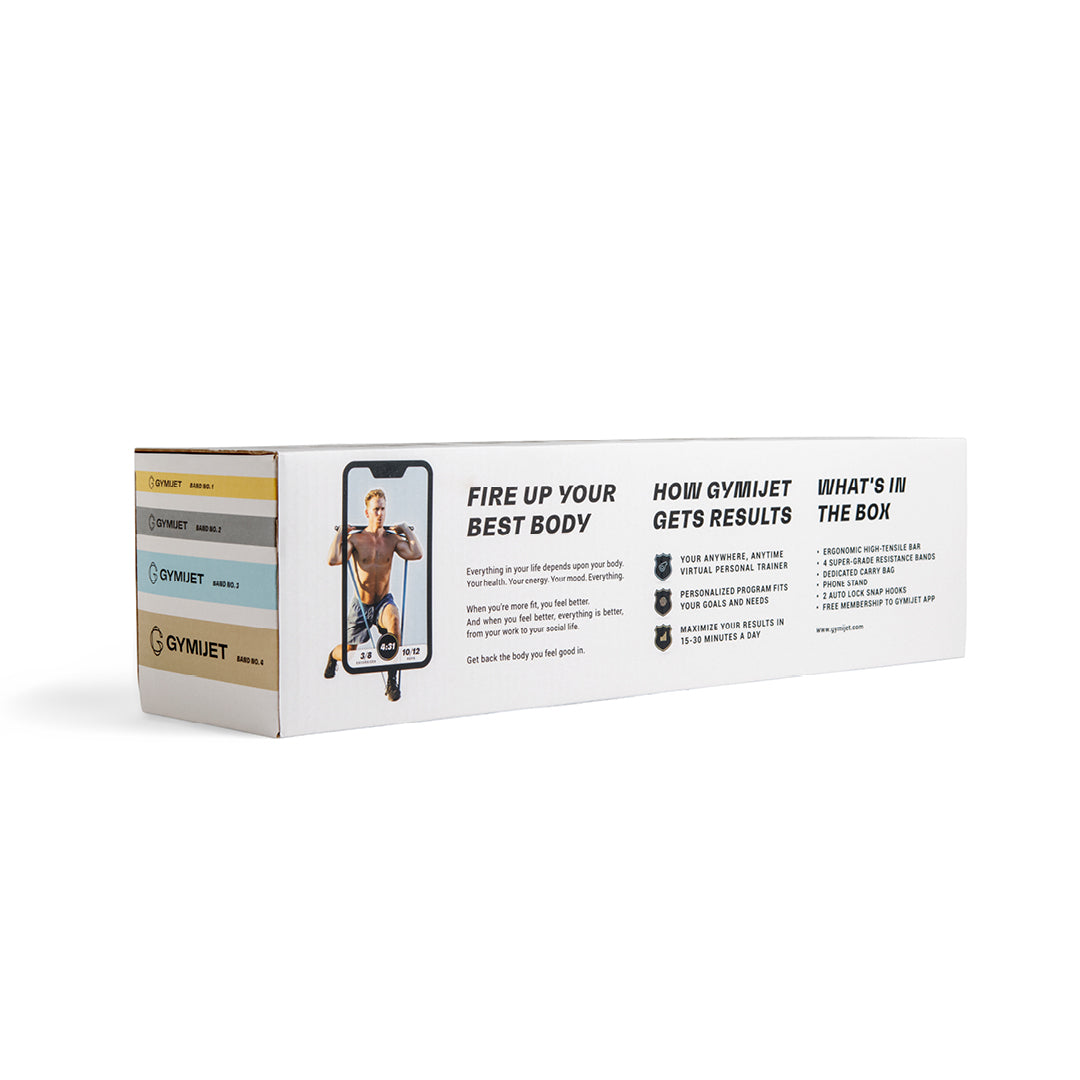
Gymijet's AI technology goes beyond simple rep counting. The system analyzes movement quality throughout each exercise, ensuring you're maximizing effectiveness while maintaining technique that supports long-term progress.
The Benefits: What AI Personal Trainers Excel At
1. Unprecedented Accessibility and Affordability
Personal training typically costs $50-150 per hour-long session. For twice-weekly training over a year, that's $5,200-15,600. AI-powered fitness solutions deliver personalized guidance for a fraction of that investment, which is often under $200 annually.
This is perfect for those with limited gym access, budget-conscious fitness enthusiasts, and busy individuals, such as parents who struggle to fit proper gym hours into their schedules.
2. Perfect Consistency and Recall
Human trainers have off days. They get tired, distracted, or forget details about your last workout. AI never experiences this problem. It remembers every session you've ever completed, including your exact weights, reps, form quality, energy levels, and even the time of day when you trained best.
This perfect memory allows for unprecedented pattern recognition. The AI might notice you consistently perform better on Tuesday mornings versus Friday evenings, or that your squat form deteriorates specifically around rep 8. These insights drive smarter programming decisions.
3. Data-Driven Personalization at Scale
Research shows that personalized fitness apps powered by AI experience three times higher user engagement compared to traditional apps.
AI analyzes thousands of data points: your fitness goals, current fitness level, available equipment, workout history, injury history, exercise preferences, time constraints, and recovery patterns. From this information, it generates personalized programs instead of generic workouts.
As you progress, the AI continuously refines its understanding of your response to training stimuli. It learns your optimal volume, intensity sweet spots, and recovery needs, making each subsequent program more effective than the last.
4. Injury Prevention Through Precise Form Analysis
Improper form is the leading cause of training-related injuries. Research on human pose estimation in fitness applications demonstrates that AI systems can detect movement patterns with accuracy comparable to that of trained observers in many contexts.
The AI flags potentially dangerous movement patterns: excessive lower back rounding during deadlifts, knee valgus during squats, and shoulder impingement during overhead presses. Rather than discovering you've been performing exercises incorrectly for months, you receive immediate correction during your first attempt.
5. Privacy and Comfort
Many people feel self-conscious working out in front of others. AI personal trainers eliminate this barrier. You can make mistakes, have bad form days, or wear whatever you want without judgment. For individuals dealing with body image concerns, social anxiety, or simply preferring private training environments, AI offers a psychologically comfortable alternative.
The Limitations: What AI Personal Trainers Still Can't Match
1. The Missing Human Element
No algorithm can replicate genuine human encouragement. When a real trainer pushes you through the last difficult rep, sensing exactly when you need motivation versus when you need to back off, that's emotional intelligence AI hasn't mastered.
Human trainers read facial expressions, energy levels, body language, and mood to gauge their effectiveness. They adjust not just based on physical performance data, but on how you're feeling that day. Had a stressful week at work? A skilled trainer modifies the session accordingly. AI systems, while sophisticated, struggle to achieve a holistic understanding of your physical and emotional state.
2. Complex Needs Require Human Expertise
AI personal trainers excel with generally healthy individuals pursuing standard fitness goals. They become less effective for people with:
- Multiple concurrent injuries require specialized modifications
- Complex medical conditions (advanced diabetes, cardiovascular disease, neurological disorders)
- Special populations (prenatal/postnatal, geriatric with multiple comorbidities)
- Rehabilitation from surgery or serious injury
These scenarios demand professional judgment, manual assessment skills, and credential-backed expertise that current AI cannot safely replicate. Research examining AI-generated exercise prescriptions found that while AI offers generally safe recommendations, it lacks the personalization, creativity, and variability that fitness specialists provide for complex cases.
3. Technology Limitations and Accuracy Concerns
Computer vision pose estimation, while impressive, isn't perfect. Studies reveal several accuracy challenges:
- Gender differences: Models trained primarily on male subjects may produce less accurate results for female users due to physiological body composition differences
- Clothing interference: Loose or baggy clothing can obstruct keypoint detection, reducing accuracy
- Lighting conditions: Poor lighting significantly impacts pose estimation quality
- Camera angles: Single-camera setups miss out-of-plane movements that multi-camera systems capture
Research on pose estimation models shows that while systems like BlazePose achieve mean absolute errors below 30mm in 70.9% of trials, and under 5° for joint angles in 43% of cases, there's still room for improvement before matching gold-standard motion capture precision.
4. The Plateaus Problem
AI excels at progressive overload, which is a gradual increase in training stimulus. However, breaking through plateaus often requires creative programming approaches, exercise variations, periodization schemes, and sometimes counterintuitive strategies that experienced human trainers excel at designing.
Current AI tends toward conservative programming, prioritizing safety over aggressive progression. This approach works well for beginners and intermediates, but may limit advanced athletes who seek to push boundaries.
5. No Hands-On Corrections
Sometimes, proper form requires physical adjustment. A trainer placing your hand differently on a barbell, adjusting your foot position, or manually guiding movement through a proper range of motion provides tactile learning that AI cannot deliver through a screen.
How Gymijet Maximizes AI Benefits While Minimizing Limitations
Gymijet addresses many AI personal trainer limitations through thoughtful system design:
Intelligent Quality Control
Rather than simply counting repetitions, Gymijet's AI evaluates the quality of movement. Only full-range, properly executed movements register. This prevents the common pitfall of users "gaming" the system with partial reps or poor form just to hit numbers.
Adaptive Progressive Programming
The system doesn't just follow a fixed plan. Based on your performance, Gymijet's AI automatically adjusts workout difficulty, ensuring you're always training at the optimal intensity for progress without risking overtraining or injury.
Designed for Real-World Constraints
Recognizing that many people lack dedicated home gyms, Gymijet's portable system offers full-body training with equipment that weighs just 6 pounds. The AI programming accounts for this unique equipment type, delivering effective resistance training anywhere.
Workout Flexibility
With extensive workout plans tailored to different goals, fitness levels, and time constraints, Gymijet combines AI adaptability with human-created programming variety, blending the best of both approaches.
Expert Tips for Getting the Most from AI Personal Trainers
- Computer vision accuracy depends heavily on proper setup. Research indicates that lighting conditions, camera angles, and clothing choices have a significant impact on the effectiveness of pose estimation. Position your camera at torso height, ensure adequate, even lighting, and wear form-fitting clothes that allow the AI to detect body keypoints accurately. This simple setup optimization can improve movement analysis accuracy by 20-30%.
- AI personalization improves with consistent data input. A scoping review of AI methodologies in physical activity interventions found that machine learning models demonstrate superior prediction accuracy when trained on comprehensive user data. Log every workout, track energy levels, note any discomfort, and maintain consistent usage. The more information your AI system collects about your patterns, the better it personalizes your program.
- Treat AI as a training partner, not a complete replacement. Studies comparing AI-generated exercise prescriptions to human-created programs highlight that AI currently excels as a supplemental tool rather than a standalone solution, particularly for individuals with complex health conditions. If you have specialized needs, injuries, or chronic conditions, consult qualified fitness or medical professionals in addition to using AI systems. This hybrid approach maximizes safety and effectiveness.
- Understand AI's current accuracy limitations. Research on human pose estimation reveals that while advanced models, such as BlazePose and MoveNet, perform well, they still exhibit variability, with mean absolute errors of 3-5° for joint angles under optimal conditions. Don't rely solely on AI for perfect form assessment—develop your own body awareness through education, mirrors, and periodic professional form checks.
- Engagement drives results, and AI significantly increases engagement. McKinsey research demonstrates that personalized fitness apps powered by AI experience three times higher user engagement compared to traditional fitness applications. Leverage AI's gamification features, progress tracking, and adaptive workouts to maintain motivation. The algorithm adapts to keep you challenged yet successful—the sweet spot for long-term adherence.
FAQs
Can AI personal trainers really replace human trainers?
For most general fitness goals, AI personal trainers provide excellent guidance at a fraction of the cost. Think of AI as democratizing access to quality programming rather than eliminating the value of human expertise.
How accurate is the form feedback from AI fitness apps?
Accuracy varies by technology and setup. However, factors such as poor lighting, baggy clothing, or unusual body types can reduce accuracy. AI form feedback works best as a general guide supplemented by your own body awareness and occasional professional form checks. It's highly effective at catching major form breakdowns but may miss subtle nuances in technique.
Is AI personal training safe for beginners?
Yes, AI personal trainers are generally safe for healthy beginners and often provide advantages over unsupervised training. AI systems typically program conservatively, especially for beginners, prioritizing gradual progression over aggressive intensity. However, complete beginners benefit from at least one session with a qualified human trainer to learn basic movement patterns, then transition to AI-guided training with that foundational knowledge.
What equipment is required for AI personal training?
Most AI fitness apps require only a smartphone or tablet with a camera, making them accessible to a wide range of users. For comprehensive strength training, you'll need resistance equipment. This is where Gymijet's portable gym excels, providing everything needed for full-body training in a compact, 6-pound system. Unlike AI apps that require you already to own dumbbells, bands, or gym access, Gymijet's integrated solution combines AI coaching with complete resistance training equipment.
Can AI personal trainers help with weight loss?
Absolutely. AI personal trainers excel at creating consistent exercise routines, which research shows significantly impacts weight loss success. Many AI fitness platforms integrate nutrition tracking and provide dietary guidance alongside workout programming.
AI optimizes the exercise component by creating efficient and progressive programs that maximize calorie burn and muscle retention; however, it is also essential to address nutrition. Gymijet's AI ensures your workouts progressively challenge you, supporting the metabolic adaptations needed for sustainable weight loss.
Experience Intelligent Fitness Training With Gymijet
AI personal trainers represent a legitimate revolution in fitness accessibility and personalization. Through computer vision, machine learning, and adaptive programming, they deliver genuinely valuable training guidance that was previously available only through expensive human trainers.
Whether you're a busy professional, a remote worker, a parent with limited gym time, or a budget-conscious fitness enthusiast, AI personal trainers offer a compelling path to achieving your health goals.
Ready to experience intelligent fitness training? Explore Gymijet's AI-Powered Fitness App and discover how technology can transform your workout routine.


Reviewed by
Dr. Michele Kong, MD, MBA
Pediatric Critical Care Medecine
Dr. Michele Kong is a Professor and physician scientist who specializes in pediatric intensive care and clinical research on severe respiratory illnesses and sensory integration challenges. She has extensive experience in evidence-based medicine and child wellness, bringing both a scientific and compassionate perspective to the importance of health, movement, and adaptive fitness—core values reflected in Gymijet’s mission.
Beyond her medical and academic career, Dr. Kong is the co-founder of KultureCity, a leading nonprofit dedicated to creating inclusive and sensory-accessible environments worldwide. Her work has earned national recognition for advancing accessibility, community health, and neurodiversity awareness.
Dr. Kong’s multidisciplinary background connects clinical expertise with human-centered innovation. Her insights help make health and fitness more inclusive, data-driven, and sustainable. Her contributions to Gymijet’s content ensure every article aligns with the highest standards of credibility, research integrity, and real-world applicability, allowing readers to be more empowered in pursuing smarter, safer, and more personalized approaches to wellness.