AI Workout Analysis: Tracking Strength & Progress with Data
Imagine having a personal fitness analyst watching every rep, every set, every session—quietly tracking patterns, measuring improvements, and adjusting your training plan in real-time based on your unique progress. This isn't science fiction; it's the reality of AI-powered workout analysis transforming how we build strength and track fitness gains in 2025.
The global AI in fitness and wellness market is projected to skyrocket from $9.8 billion in 2024 to $46.1 billion by 2034, driven by one revolutionary capability: the power to turn raw workout data into actionable intelligence. While traditional fitness tracking merely counted reps and logged weights, modern AI systems analyze movement quality, identify performance patterns, predict optimal progression, and provide personalized feedback that accelerates results.
Whether you're a busy mom squeezing workouts into a packed schedule or an experienced lifter seeking to break through plateaus, data-driven training is revolutionizing how we measure success and achieve sustainable strength gains.
The Challenge: Traditional Progress Tracking Falls Short
For decades, fitness enthusiasts have relied on primitive methods to track their training progress, such as scribbling numbers in notebooks, mentally estimating improvements, or simply "feeling" whether they're getting stronger. These approaches create significant barriers to achieving consistent and measurable progress.
Incomplete Data Creates Blind Spots
Traditional tracking captures only surface-level information—weight lifted and reps completed—while overlooking crucial variables such as movement velocity, time under tension, rep quality, and recovery status. Without comprehensive data, you're essentially driving with a partially obscured windshield, unable to see the complete picture of your fitness journey.
Subjectivity Clouds Judgment
Relying on how you "feel" about workout difficulty introduces dangerous bias. Research demonstrates that individuals frequently misjudge their effort levels, either pushing too hard and risking burnout or not challenging themselves enough to stimulate growth. This subjective assessment prevents optimal progression and makes plateau-breaking nearly impossible.
Inconsistent Tracking Undermines Progress
Studies show that manual tracking suffers from adherence challenges, with many individuals abandoning their logging systems within weeks. Inconsistent data collection makes it impossible to identify trends, spot weaknesses, or confidently adjust programming based on historical performance.
Progressive Overload Becomes Guesswork
The principle of progressive overload—gradually increasing training stress—is fundamental to strength gains. However, implementing it effectively requires precise tracking of multiple variables over time. When should you increase weight? By how much? Have you recovered sufficiently? Without data, these critical questions rely on guesswork rather than evidence.
How AI Transforms Workout Analysis and Progress Tracking
Artificial intelligence eliminates these limitations by automating data collection, analyzing patterns that human observation would miss, and providing personalized insights that optimize every training session.
Real-Time Movement Analysis
Modern AI systems utilize computer vision technology to analyze your movement patterns during each exercise. Rather than simply counting reps, the AI evaluates whether each repetition meets quality standards for range of motion, tempo, and proper form. A rep only registers when executed correctly, ensuring that every counted repetition contributes meaningful training stimulus toward your goals. This intelligent recognition dramatically improves workout efficiency by eliminating "junk volume"—incomplete or improper reps that waste time without building strength.
Comprehensive Performance Metrics
AI-powered platforms track dozens of variables simultaneously, creating a multidimensional profile of your fitness performance. Beyond basic weight and reps, these systems monitor movement velocity, volume load, fatigue accumulation, muscle recovery status, and training frequency patterns. This comprehensive data collection enables the AI to understand not just what you did, but how well you did it and whether you're progressing optimally.
Intelligent Pattern Recognition
Machine learning algorithms excel at identifying trends invisible to human observation. The AI analyzes your workout history to detect patterns, such as which exercises produce the best strength gains for your body, the optimal training frequency for each muscle group, early warning signs of overtraining, and the ideal timing for increasing training intensity. These insights transform reactive training—where you respond to plateaus after they occur—into proactive programming that prevents stagnation.
Automated Progressive Overload
AI systems calculate optimal progression recommendations based on your unique response patterns. Rather than following generic advice like "add 5 pounds each week," the AI determines precisely when you're ready to advance, by how much, and through which progression method (increased weight, reps, sets, or tempo). This personalized approach to progressive overload ensures continuous adaptation without excessive fatigue or injury risk of injury.
Data-Driven Workout Optimization
The AI continuously adapts your workout plans based on performance data and recovery status. If the system detects accumulated fatigue, it automatically adjusts training volume or intensity to promote recovery. When progress data indicates readiness for greater challenges, the AI increases training demands appropriately. This dynamic optimization keeps you consistently training at the edge of your capabilities without crossing into overtraining territory.
How Gymijet Solves This Problem
Gymijet stands at the intersection of AI intelligence and practical fitness application, offering a comprehensive data-driven training ecosystem that makes professional-level workout analysis accessible to everyone.
Intelligent Rep Recognition System
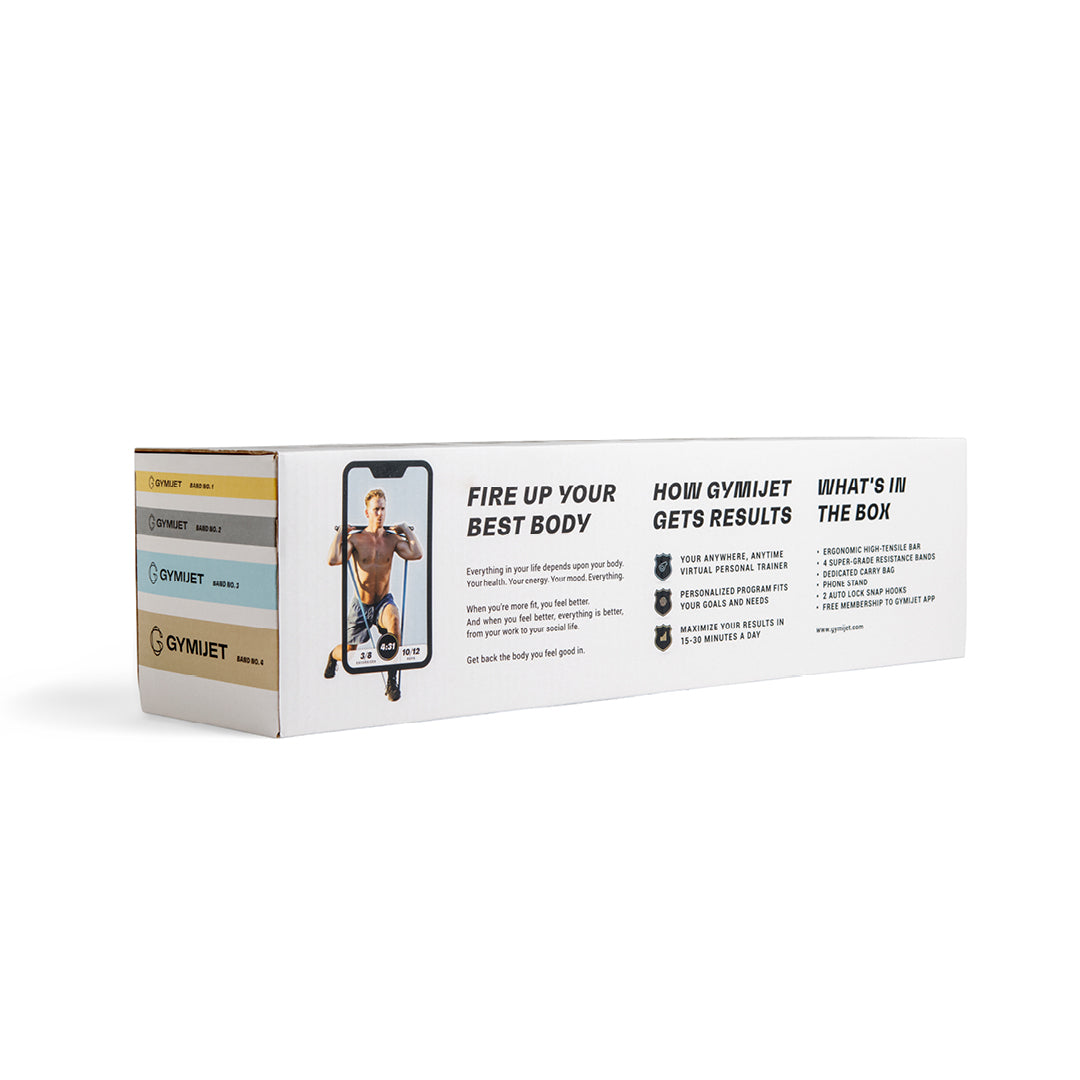
The Gymijet portable gym kit features AI-powered movement analysis that evaluates every repetition in real-time. The system recognizes proper movement execution and only counts reps that meet quality standards for range of motion and control. This ensures your workout efficiency skyrockets, as every counted rep contributes maximally to your strength gains. No more wondering if you're really progressing—the data provides objective confirmation of your improvements.
Comprehensive Progress Dashboard
Gymijet's platform provides visual analytics that transform raw workout data into actionable insights. Track strength trends across all exercises, monitor volume progression over weeks and months, identify which muscle groups are responding optimally, and spot performance patterns that inform programming adjustments. These analytics eliminate guesswork from your training, replacing subjective feelings with objective evidence of progress.
Adaptive Workout Algorithms
As you complete sessions, Gymijet's AI analyzes your performance history and automatically optimizes future workouts. The system determines optimal weight recommendations, adjusts rep schemes based on your response patterns, manages training volume to balance stimulus and recovery, and implements progressive overload at the precise rate your body can sustain. This adaptive programming ensures you're always training optimally, regardless of experience level or current fitness status.
Space-Efficient Data Collection
Unlike traditional gym equipment that requires dedicated space, Gymijet delivers comprehensive workout analysis in a portable, storage-friendly package that fits in any home. The compact resistance-based system provides the same data-driven training optimization as commercial gym equipment, making advanced analytics accessible regardless of your living situation.
Consistency Through Accountability
Gymijet's data tracking fosters natural accountability, driving adherence. Seeing your progress visualized in clear charts and metrics provides powerful motivation to maintain consistency. For optimal results, commit to a minimum of 15-minute daily sessions. Thirty-minute workouts produce the most significant transformations when maintained for at least 60 days. The data will clearly demonstrate your improvements, reinforcing the behaviors that drive results.
Expert Tips: Maximizing Data-Driven Training Results
The following research-backed strategies will help you leverage workout analytics effectively to accelerate strength gains and maintain long-term progress:
1. Embrace the Power of Self-Monitoring for Behavior Change
Research published in the National Institutes of Health confirms that wearable activity trackers demonstrate significant efficacy in facilitating increases in physical activity, with meta-analysis showing meaningful improvements in workout consistency and volume. The study emphasizes that self-monitoring through technology creates accountability mechanisms that traditional methods cannot replicate. Consistent tracking enables you to visualize progress that might otherwise go unnoticed, maintaining motivation during periods when strength gains feel incremental.
2. Prioritize Data Quality Over Data Quantity
While it's tempting to track every possible metric, research demonstrates that focusing on key performance indicators produces superior results. According to a comprehensive review in The Lancet Digital Health, the most effective fitness tracking interventions emphasize quality movement patterns and progressive volume increases rather than overwhelming users with excessive data points. Focus your attention on primary metrics, such as weight lifted, reps completed with proper form, and overall training volume, allowing the AI to manage secondary variables automatically.
3. Leverage Progress Tracking to Enhance Motivation and Commitment
Studies in behavioral psychology confirm that tracking progress toward goals significantly enhances motivation and commitment, with public commitment increasing follow-through rates. The research demonstrates that monitoring and recording performance provides feedback mechanisms that improve both persistence and performance outcomes. Use your Gymijet dashboard to celebrate milestones—whether increasing resistance, completing additional reps, or maintaining training consistency—as these acknowledgments reinforce positive behaviors and sustain long-term adherence.
4. Combine Technology with Personalized Feedback for Maximum Impact
A UCLA study published in Frontiers in Physiology revealed that users of wearable devices who received customized, data-driven feedback achieved significantly greater health improvements compared to those using devices alone. The research demonstrated that personalized messages based on performance data—praising improvements, encouraging progression, and analyzing patterns—created accountability that transformed short-term usage into lasting behavioral change. Gymijet's AI provides this intelligent feedback automatically, adjusting recommendations based on your unique response patterns to ensure continuous optimization.
5. Understand That Consistent Tracking Trumps Perfect Tracking
Research examining fitness app usage over five months found that long-term behavior change depends more on consistent logging—even if imperfect—than on comprehensive but sporadic tracking. The study emphasized that automatic tracking features and simplified data entry significantly improved adherence rates. Gymijet's automated movement recognition eliminates tracking friction, allowing you to focus on workout execution while the system captures performance data seamlessly. This automation ensures consistency without requiring additional effort or discipline beyond completing your training sessions.
FAQs
How accurate is AI workout tracking compared to personal trainer observation?
AI-powered movement analysis provides remarkably accurate performance assessment, often exceeding human observation capabilities for repetitive movements. Research shows that computer vision algorithms can detect subtle form deviations and movement pattern inconsistencies that even experienced trainers might miss during real-time observation. However, the ideal scenario combines AI precision for data collection and analysis with human expertise for program design and motivational support.
Will tracking data help me break through strength plateaus?
Absolutely. Plateaus typically occur when training stimulus becomes predictable, recovery is inadequate, or progression timing is suboptimal. Comprehensive workout data enables the AI to identify which of these factors is limiting your progress and adjust programming accordingly. Studies on progressive overload demonstrate that systematic, data-driven progression produces significantly superior strength gains compared to intuitive or random progression methods. Research shows that strength improvements are approximately 50% greater when using objective tracking systems versus subjective assessment.
How much data is required to see meaningful patterns in my training?
Initial pattern recognition can occur within 2-3 weeks of consistent tracking, as the AI establishes baseline performance across different exercises and identifies your typical recovery patterns. However, the most valuable insights emerge after 8-12 weeks of data collection, when the system has sufficient information to detect trends, predict optimal progression rates, and customize programming to your unique response characteristics.
Can beginners benefit from AI workout analysis, or is it only for advanced lifters?
AI-powered analysis proves especially valuable for beginners, who often lack the experience to assess their own performance accurately or understand optimal progression rates. The technology prevents common beginner mistakes, such as progressing too aggressively (risking injury) or too conservatively (limiting gains), by implementing evidence-based progression tailored to individual capacity. Additionally, real-time movement feedback helps beginners develop proper technique from the start, establishing good habits that accelerate long-term progress and prevent the need to "unlearn" improper movement patterns later.
Does tracking workout data actually improve long-term consistency?
Research consistently demonstrates that workout tracking significantly improves adherence rates. Studies show that individuals using data-driven fitness technology maintain exercise routines 37% longer than those without tracking systems. The accountability created by visible progress records, combined with the motivational boost from seeing measurable improvements, creates a positive feedback loop that sustains long-term commitment. Automated tracking systems, like Gymijet's AI, eliminate the friction of manual logging, making consistency easier to maintain without requiring additional discipline beyond simply showing up for your scheduled workouts.
Transform Your Training with Data-Driven Intelligence
The fitness industry has evolved beyond guesswork and subjective assessment into an era of precision training powered by artificial intelligence and comprehensive data analysis. AI workout analysis doesn't just track what you do—it understands how you respond, predicts optimal progression, and continuously optimizes your training to accelerate results while preventing plateaus and overtraining.
The research is unequivocal: data-driven training produces superior outcomes compared to traditional methods. Comprehensive tracking improves consistency, intelligent analysis identifies optimal progression timing, personalized feedback maintains motivation, and automated systems eliminate the friction that typically undermines long-term adherence.
Ready to experience the power of data-driven training? Get Your Portable AI Gym and start tracking measurable progress toward your strength goals. Join thousands who have discovered that when you measure what matters and let AI optimize the details, remarkable transformations become not just possible, but inevitable.


Reviewed by
Dr. Michele Kong, MD, MBA
Pediatric Critical Care Medecine
Dr. Michele Kong is a Professor and physician scientist who specializes in pediatric intensive care and clinical research on severe respiratory illnesses and sensory integration challenges. She has extensive experience in evidence-based medicine and child wellness, bringing both a scientific and compassionate perspective to the importance of health, movement, and adaptive fitness—core values reflected in Gymijet’s mission.
Beyond her medical and academic career, Dr. Kong is the co-founder of KultureCity, a leading nonprofit dedicated to creating inclusive and sensory-accessible environments worldwide. Her work has earned national recognition for advancing accessibility, community health, and neurodiversity awareness.
Dr. Kong’s multidisciplinary background connects clinical expertise with human-centered innovation. Her insights help make health and fitness more inclusive, data-driven, and sustainable. Her contributions to Gymijet’s content ensure every article aligns with the highest standards of credibility, research integrity, and real-world applicability, allowing readers to be more empowered in pursuing smarter, safer, and more personalized approaches to wellness.