The Rise of Smart Workout Equipment in 2025
The Rise of Smart Workout Equipment in 2025
The fitness landscape is experiencing a seismic shift as smart workout equipment becomes the cornerstone of modern home training. Gone are the days when getting fit required expensive gym memberships and bulky equipment that cluttered your home. Today's fitness enthusiasts are embracing AI-powered, connected devices that transform any space into a personalized training center.
The global smart fitness market is projected to reach $59.8 billion by 2035, growing at a remarkable 12.3% annually. This explosive growth reflects a fundamental change in how people approach health and wellness. Whether you're a busy professional squeezing in workouts between meetings, a new mom rebuilding strength postpartum, or a remote worker combating sedentary habits, smart fitness technology is revolutionizing accessibility, personalization, and results. With AI integration leading the charge, 2025 marks the year when intelligent workout equipment becomes not just a luxury but an essential tool for anyone serious about their fitness journey.
The Challenge: Traditional Fitness Equipment Isn't Keeping Up
For decades, home fitness meant choosing between overpriced, space-consuming machines or basic, ineffective equipment that failed to deliver results. Traditional gym equipment often sits unused in garages and spare rooms, becoming expensive coat racks rather than fitness solutions. The limitations are clear and frustrating.
Space constraints plague urban dwellers and anyone without a dedicated home gym. Treadmills, weight benches, and cable machines demand entire rooms, making fitness inaccessible for apartment residents and families with storage-friendly fitness gear needs.
A lack of personalization leaves users unsure about the proper progression, form, and programming. Without expert guidance, many exercisers plateau quickly or risk improper technique, which can diminish their results. The one-size-fits-all approach of traditional equipment simply doesn't account for individual fitness levels, goals, or limitations.
Motivation challenges compound these issues. Studies show that 51% of US exercisers now prefer at-home workouts; however, staying motivated without accountability and community support proves to be difficult. Traditional equipment offers no feedback, no celebration of progress, and no adaptive programming to keep workouts fresh and challenging.
Cost barriers prevent many from accessing quality fitness solutions. Gym memberships typically cost $50-$ 100 per month, totaling $600-$ 1,200 annually, while traditional home equipment often requires thousands of dollars upfront with no guarantee of results or continued use.
Smart Technology Transforms Modern Workouts
The 2025 smart fitness revolution addresses these pain points through three game-changing technological innovations that are reshaping how we train at home.
AI-Powered Personalization
Artificial intelligence has evolved from simple rep counting to becoming your personal fitness coach. Modern AI analyzes your movement patterns, progress data, and performance metrics to create personalized workout programs that adapt to your needs. Rather than following generic routines, smart equipment now adapts exercises in real-time based on your capabilities, ensuring every workout matches your current fitness level and pushes you appropriately toward your goals.
The AI track reps and recognizes proper movement execution. When the movement meets quality standards, the rep counts; when it doesn't, you get another chance to perform it correctly. This intelligent recognition ensures workout efficiency skyrockets as every counted rep contributes meaningful progress toward your goals. For remote workers dealing with sitting fatigue, this technology makes maintaining an active lifestyle significantly more achievable.
Connected Ecosystems
Smart fitness equipment now seamlessly integrates with wearables, apps, and cloud platforms to create comprehensive health ecosystems. Your smartwatch heart rate data, sleep patterns from your fitness tracker, and workout performance from your smart equipment sync automatically, providing holistic insights into your overall wellness. This connectivity enables smart devices to understand your recovery status and adjust training intensity accordingly, preventing burnout while maximizing results.
Space-Efficient Innovation
The latest smart fitness solutions prioritize portability and compact design without sacrificing effectiveness. Resistance-based systems, smart mirrors, and modular equipment deliver full-body workouts in minimal space. This innovation is particularly valuable for individuals balancing fitness with busy lives, as these systems can be easily stored when not in use and set up in minutes when it's time to train.
How Gymijet Solves This Problem
Gymijet stands at the forefront of the smart fitness revolution, offering the perfect convergence of AI intelligence, portability, and proven results. While other smart equipment often requires dedicated spaces and premium subscriptions, Gymijet's approach democratizes access to world-class training technology.
Intelligent Workout Optimization
The Gymijet portable gym kit leverages AI to analyze your movements and optimize every session. Rather than simply tracking your workout, the AI actively coaches you through proper movement execution. When you complete a full, quality rep with a proper range of motion, the system counts it. Incomplete or improper movements don't register, ensuring that your workout time delivers maximum efficiency and results. This intelligent system also adapts your programming as you progress, automatically adjusting resistance recommendations and exercise variations to challenge your muscles and prevent plateaus continually.
Portable Power
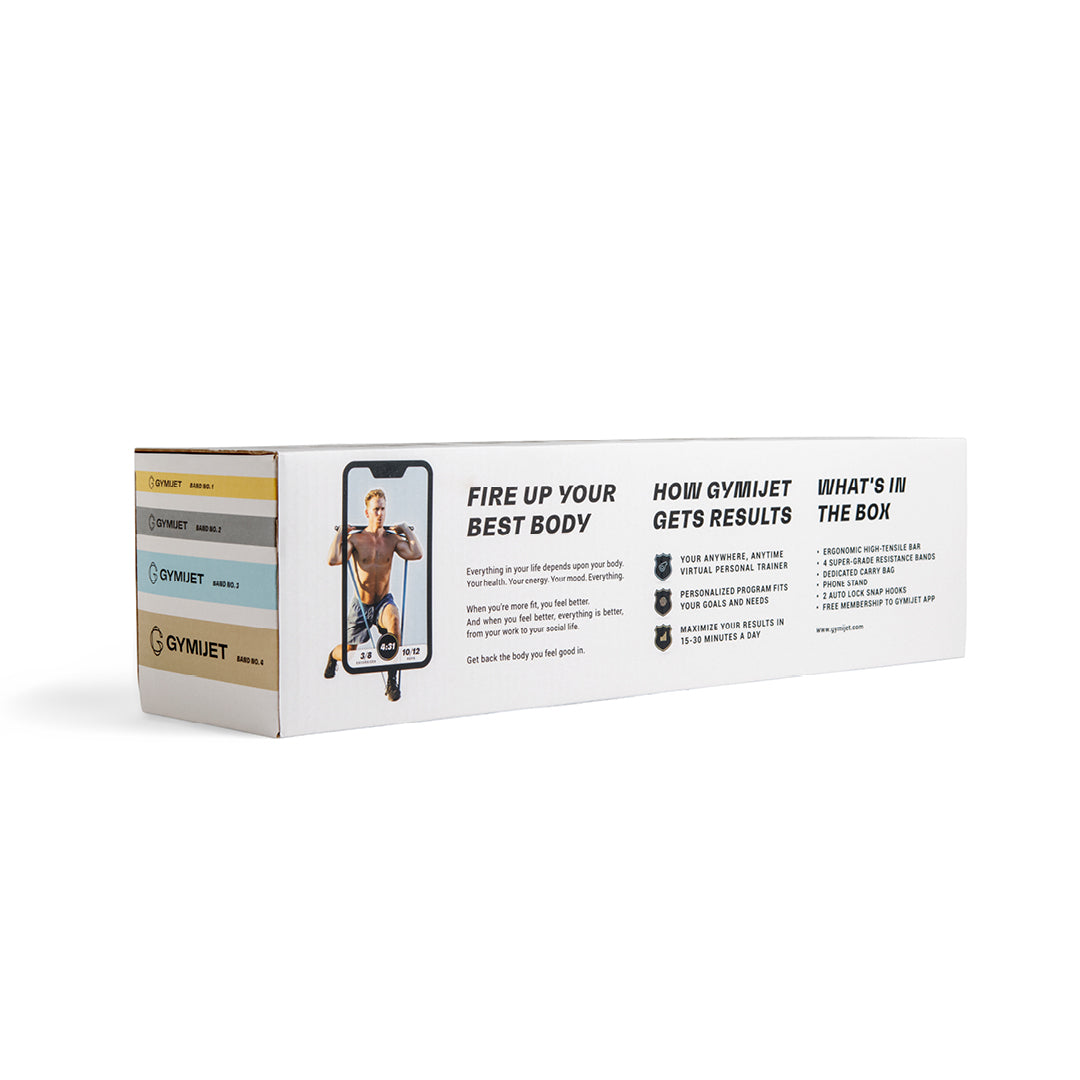
Weighing just 6 pounds and fitting easily into a backpack, Gymijet transforms any location into your personal training studio. The compact resistance-based system provides progressive overload comparable to traditional weights, allowing you to build strength whether you're at home, in a hotel room, or outdoors. This portability makes Gymijet ideal for busy moms managing tight schedules, business travelers, digital nomads, and anyone whose lifestyle demands flexibility.
Comprehensive Training Programs
Gymijet offers structured workout plans tailored to diverse goals, ranging from muscle building to postpartum recovery and general fitness maintenance. Each program is crafted by fitness professionals and delivered through the AI-powered app, which guides you through exercises with clear demonstrations and real-time feedback. For optimal results, Gymijet recommends committing to at least 15-minute sessions daily, with 30-minute workouts producing the most significant transformations when maintained for at least 60 days.
Community and Accountability
Beyond equipment and AI coaching, Gymijet fosters a supportive community where users share progress, challenges, and victories. This social element addresses one of the biggest shortcomings of home workouts—the lack of accountability and motivation that comes from training alone.
Expert Tips: Maximizing Your Smart Fitness Investment
The following evidence-based insights will help you leverage smart workout equipment effectively and achieve sustainable fitness results:
1. Commit to Minimum Effective Dose for Results
Research published in the National Institutes of Health demonstrates that home-based exercise programs produce significant improvements in physical function, muscle strength, and body composition when performed consistently. The key to success lies in establishing a sustainable routine of at least 15 minutes daily, with 30-minute sessions providing optimal benefits when maintained for 60 days or more. Smart equipment makes meeting this threshold easier by eliminating commute time and setup barriers that traditionally prevent consistency.
2. Embrace Resistance Training for Comprehensive Health Benefits
Peer-reviewed studies confirm that resistance training has a profound effect on metabolic health, with ten weeks of consistent training increasing lean body mass by 1.4 kg, boosting the resting metabolic rate by 7%, and reducing fat mass by 1.8 kg. Beyond aesthetic changes, resistance training improves cardiovascular health, enhances cognitive function, and strengthens bones. Smart resistance equipment makes these benefits accessible to everyone, regardless of experience level, by automatically adjusting difficulty and providing technique guidance.
3. Leverage AI for Progressive Overload
Research demonstrates that AI-powered fitness apps enable superior personalization compared to traditional programs, with the global market for AI fitness applications expected to surpass $23.98 billion by 2026. The AI integration in modern equipment ensures proper progression by monitoring your performance and systematically increasing training demands. This automated progressive overload prevents the common plateau that derails many fitness journeys when using traditional, static equipment.
4. Integrate Wearable Technology for Holistic Insights
Studies show that wearable technology integration significantly enhances fitness outcomes by providing comprehensive data on sleep quality, recovery status, and daily activity levels. The wearable technology market is projected to reach $178 billion, reflecting its value in optimizing training. When your smart workout equipment syncs with wearables, you gain insights that prevent overtraining, identify ideal workout timing, and track long-term trends that inform programming adjustments.
5. Prioritize Consistency Over Intensity
Scientific evidence from the Journal of Applied Physiology suggests that workout adherence outweighs workout intensity in maintaining long-term fitness. Smart equipment removes common barriers to consistency—such as commute time, equipment availability, and the intimidation factor—making it easier to establish sustainable habits. The convenience of home-based smart equipment enables regular training frequency, which drives lasting transformations.
FAQs
Can smart workout equipment really match gym results?
Yes, research demonstrates that home-based smart equipment produces comparable results to traditional gym training when used consistently. A study published in ResearchGate found that both home-based and gym workouts achieve similar effects on body composition, with home workouts particularly effective for reducing waist circumference. The key factor is adherence to a structured program with progressive overload, which smart equipment facilitates through AI-powered progression and convenience.
How much space do I need for effective smart fitness equipment?
Modern smart fitness solutions require minimal space, with many systems functioning effectively in areas as small as 6 feet by 6 feet. Portable options like Gymijet can be stored in closets or under beds when not in use and set up in seconds when training time arrives. This space efficiency makes fitness accessible for apartment dwellers, small homes, and anyone lacking a dedicated gym space.
What makes AI-powered workouts more effective than following online videos?
AI-powered equipment actively analyzes your movement quality and counts only properly executed repetitions, ensuring every workout minute delivers maximum efficiency. Traditional video workouts lack this real-time feedback mechanism, allowing poor form and incomplete reps to diminish results. Additionally, AI adapts programming based on your progress, preventing plateaus that occur when following static video routines indefinitely.
Is smart fitness equipment worth the investment for beginners?
Absolutely. Smart equipment proves especially valuable for beginners by providing guidance that prevents poor form habits and ineffective programming that often plague those new to fitness. The initial investment in quality smart equipment typically costs less than one year of gym membership while providing unlimited access, personalized coaching, and the convenience that makes consistency achievable. For beginners establishing fitness habits, these factors significantly increase the likelihood of long-term success.
How do smart home gyms help maintain motivation in the long term?
Smart equipment combats motivation challenges through multiple mechanisms: progress tracking that visualizes improvements, adaptive programming that prevents monotony, community features that provide accountability, and achievement systems that celebrate milestones. Research shows these elements significantly improve adherence compared to traditional equipment, with users reporting higher engagement and longer-term commitment to their fitness routines.
Start Your Smart Fitness Journey Today
The rise of smart workout equipment in 2025 represents a fundamental shift in how we approach health and fitness. AI-powered personalization, space-efficient design, and connected ecosystems are removing the barriers that have traditionally prevented people from achieving their fitness goals. No longer must you choose between expensive gym memberships and ineffective home equipment, between personalized coaching and convenience, or between serious results and life balance.
Gymijet embodies this transformation, offering a portable AI-powered gym that adapts to your life rather than demanding your life adapt to fitness. Whether you're rebuilding strength postpartum, maintaining fitness while traveling, or simply seeking a sustainable approach to health in a busy world, smart equipment makes your goals achievable.
The evidence is clear: consistent resistance training with progressive overload delivers transformative health benefits. Smart technology makes that consistency possible for everyone, regardless of lifestyle, space constraints, or budget limitations.
Ready to experience the future of fitness? Shop the Portable AI Gym Today and join thousands who are achieving their health goals on their own terms, in their own space, with intelligent technology that evolves with them every step of the journey.


Reviewed by
Dr. Michele Kong, MD, MBA
Pediatric Critical Care Medecine
Dr. Michele Kong is a Professor and physician scientist who specializes in pediatric intensive care and clinical research on severe respiratory illnesses and sensory integration challenges. She has extensive experience in evidence-based medicine and child wellness, bringing both a scientific and compassionate perspective to the importance of health, movement, and adaptive fitness—core values reflected in Gymijet’s mission.
Beyond her medical and academic career, Dr. Kong is the co-founder of KultureCity, a leading nonprofit dedicated to creating inclusive and sensory-accessible environments worldwide. Her work has earned national recognition for advancing accessibility, community health, and neurodiversity awareness.
Dr. Kong’s multidisciplinary background connects clinical expertise with human-centered innovation. Her insights help make health and fitness more inclusive, data-driven, and sustainable. Her contributions to Gymijet’s content ensure every article aligns with the highest standards of credibility, research integrity, and real-world applicability, allowing readers to be more empowered in pursuing smarter, safer, and more personalized approaches to wellness.