The Science of AI Movement Analysis in Workouts
Picture this: You're performing squats at home, and within milliseconds, your phone alerts you that your knees are caving inward, a subtle but dangerous pattern you never noticed. Your AI coach instantly registers the correction and won't count the rep until you fix the issue. This is the new reality of AI-powered movement analysis, and it's transforming how we approach fitness.
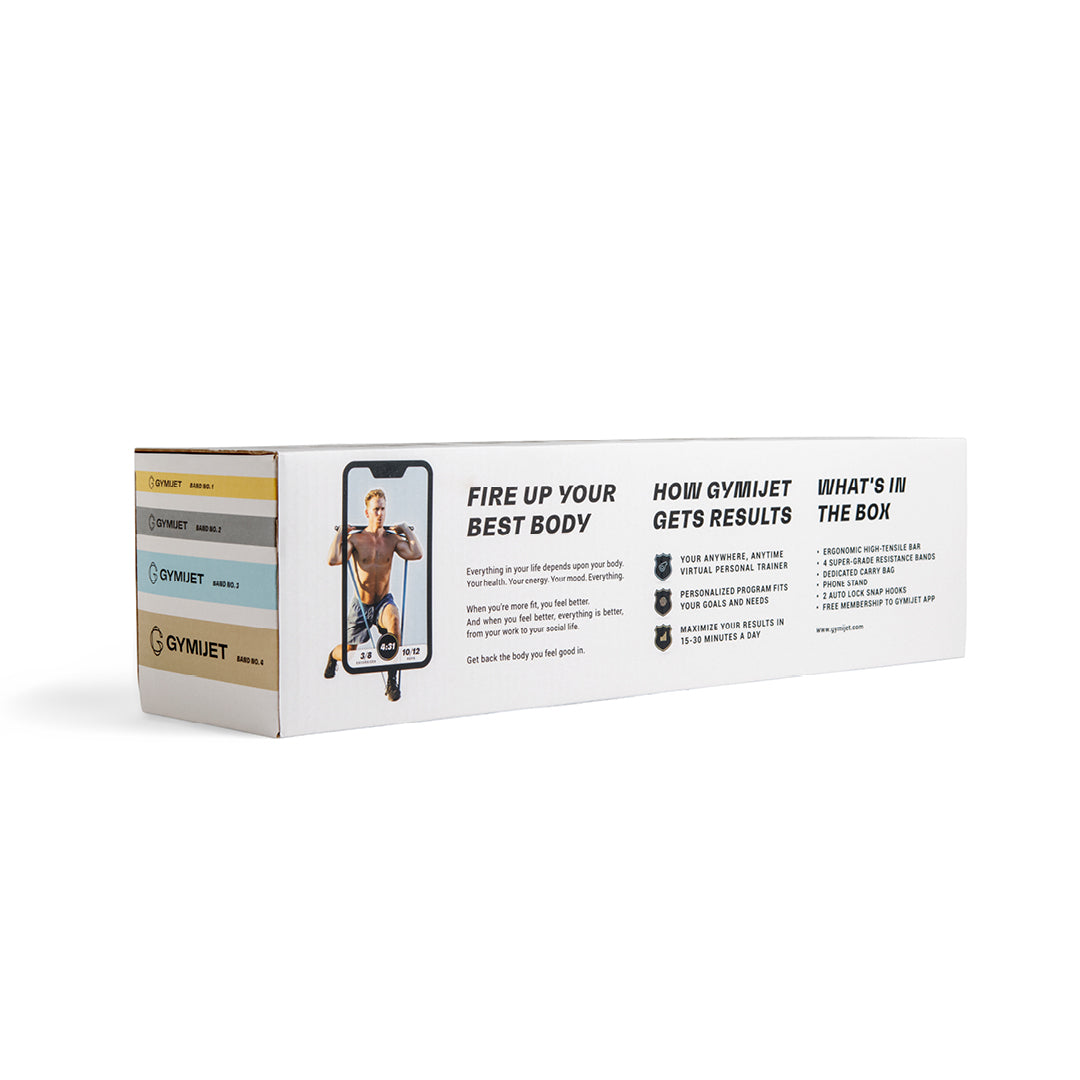
Enter AI movement analysis: technology that combines computer vision, biomechanics, and machine learning to detect, evaluate, and improve exercise technique in real-time. Gymijet's intelligent fitness system represents this breakthrough: technology that doesn't just count reps, but ensures every movement you perform contributes to progress rather than risk.
The Biomechanical Foundation: Why Proper Form Matters
The Hidden Cost of Poor Technique
Improper exercise is inefficient and dangerous. Biomechanical research reveals that optimal movement patterns reduce injury risk while maximizing training effectiveness. When you deviate from proper technique, several problems emerge simultaneously.
Disproportionate Joint Loading: Incorrect form concentrates force on structures ill-equipped to handle it. For example, during squats with excessive forward knee travel, stress is shifted disproportionately to the patellar tendon and anterior knee structures, thereby increasing the risk of injury.
Muscle Recruitment Inefficiency: Your body is remarkably adaptive. When primary movers can't handle a load due to poor position, compensatory muscles activate. This creates imbalanced development and movement patterns that reinforce dysfunction. A deadlift with a rounded lumbar spine shifts the work from the glutes and hamstrings to the spinal erectors, creating both ineffectiveness and an increased risk of injury.
Chronic Overuse Patterns: Small technique errors compound over thousands of repetitions. What initially feels fine can develop into tendonitis, stress fractures, or chronic pain months later. The insidious nature of these injuries makes prevention far more critical than treatment.
What Defines Optimal Movement?
Biomechanics researchers have identified key principles of safe, effective exercise technique:
Joint Alignment and Angles: Specific exercises demand specific joint configurations. During overhead presses, maintaining neutral spine position and controlled shoulder external rotation protects the shoulder joint while maximizing force production. AI systems track these angles with precision impossible for the human eye.
Movement Symmetry: Bilateral exercises should involve symmetrical loading and movement patterns. Significant left-right asymmetries signal weakness, mobility restrictions, or compensatory patterns requiring attention. Motion tracking easily identifies these asymmetries that often go unnoticed.
Range of Motion Completion: Partial movements limit training adaptations and can indicate mobility restrictions or compensatory avoidance of problematic joint positions. True progress requires a full, controlled range of motion through each rep.
Temporal Patterns: Movement speed and rhythm matter. Explosive movements demand rapid force production, while controlled negatives emphasize time under tension. AI can analyze whether your tempo aligns with your training intentions.
Postural Control: Maintaining proper body position throughout multi-joint movements requires coordination, stability, and strength across kinetic chains. AI evaluates whether your torso, limb, and joint positions remain optimal throughout the entire movement cycle.
How AI Movement Analysis Actually Works
Step 1: Capturing Movement Through Computer Vision
The AI movement analysis begins with computer vision, which enables the system to "see" and interpret visual information. Using your smartphone or tablet camera, the system captures video of your workout in real-time.
Advanced pose estimation algorithms then process each video frame, identifying 17-33 specific body keypoints: shoulders, elbows, wrists, hips, knees, ankles, and often more detailed points including spine segments and foot positions. These algorithms create a skeletal model overlaid on your body, tracking these points through space as you move.
Modern pose estimation models, such as MediaPipe and BlazePose, achieve this analysis at 30-60 frames per second, providing real-time feedback. The system creates a continuously updating 3D map of your body position and movement.
Step 2: Biomechanical Analysis and Pattern Recognition
Once the AI "sees" your body position, sophisticated algorithms evaluate movement quality. This involves several simultaneous analyses:
Joint Angle Calculation: By tracking relationships between connected keypoints, the system calculates precise joint angles. During a squat, it measures knee flexion, hip flexion, ankle dorsiflexion, and spine angle throughout the entire movement. These measurements compare against biomechanically optimal ranges specific to the exercise.
Movement Velocity Assessment: The AI tracks how quickly joints and body segments move through space. This distinguishes between explosive, controlled, and excessively fast (often compensatory) movements.
Symmetry Evaluation: For bilateral movements, the system compares left and right side kinematics. Significant asymmetries trigger alerts for potential imbalances requiring attention.
Pattern Matching Against Models: Machine learning algorithms, trained on thousands of expert-performed exercises, compare your movements against ideal technique models. The AI recognizes deviations that increase injury risk or reduce training effectiveness.
Gymijet's AI technology takes this further by implementing intelligent rep validation. Rather than simply counting movements, the system only registers repetitions performed with proper technique. If your range of motion is insufficient, joint angles are problematic, or movement patterns show dangerous compensation, the rep doesn't count. This ensures workout efficiency: every counted rep is a quality rep contributing to progress.
Step 3: Real-Time Feedback Delivery
The AI's analysis becomes valuable only when translated into actionable feedback. Modern systems employ multiple feedback modalities:
Visual Overlay: On-screen graphics show your current position against optimal positioning. Color-coded indicators (green for correct, yellow for caution, red for problematic) highlight specific body segments requiring adjustment.
Audio Cues: Voice prompts provide immediate corrections, such as "Drive through your heels," "Keep your chest up," and "Extend fully at the top." Audio feedback allows you to correct technique without breaking focus to check your screen.
Progressive Counting: The system only advances rep counters when movements meet quality standards. You're motivated to execute the technique correctly to progress through your sets.
Post-Set Analysis: After completing a set, detailed breakdowns show rep-by-rep quality scores, highlighting which reps demonstrated optimal technique and which need improvement.
Step 4: Adaptive Programming Adjustments
Beyond immediate feedback, AI analyzes aggregate data across your training history to inform programming decisions. If you consistently struggle with technique at specific rep ranges, the AI might adjust volume, intensity, or exercise selection.
Patterns of form degradation signal fatigue accumulation, triggering deload recommendations. Consistent high-quality movement across progressively challenging loads indicates readiness for progression. This closed-loop system continuously optimizes your training for maximum effectiveness, minimizing injury risk.
The Performance and Long-Term Result Benefits
Enhanced Training Efficiency
When every rep counts, training becomes dramatically more efficient. Research comparing quality-focused training versus volume-focused training demonstrates that technique-prioritized approaches yield superior results per unit of training time.
By ensuring each movement meets biomechanical standards, AI-guided training maximizes motor learning, muscle fiber recruitment, and training stimulus. You're no longer wasting sets on partial reps or compensatory patterns that don't contribute to adaptations.
Injury Prevention Through Technique Optimization
The injury prevention potential of AI movement analysis is substantial. Research on biomechanically informed training shows that programs targeting proper movement patterns significantly reduce injury incidence, with some studies demonstrating a 23-50% reduction in injury risk.
AI systems interrupt the pathway from poor form to chronic injury by catching and correcting technical movement errors. This is particularly valuable for solo exercisers who lack coaches to spot potential dangerous patterns.
Faster Skill Acquisition and Motor Learning
Motor learning theory emphasizes that frequent, immediate feedback accelerates skill acquisition. Traditional coaching provides intermittent feedback. AI provides continuous, immediate feedback on every single rep.
This frequency of feedback dramatically compresses the timeline for developing proper movement patterns. Rather than months of practice to master squat technique, AI-guided training can achieve proficiency in weeks.
Long-Term Adaptations and Progressive Overload
Proper technique is progressive overload to avoid injuries. Only by maintaining optimal biomechanics can you safely increase training loads over time. AI ensures that as intensity increases, technique quality doesn't degrade.
Gymijet's adaptive system recognizes when you're ready for progression based on consistent, high-quality movement. This creates a sustainable path to long-term results, such as progressive overload applied with impeccable technique.
Real-World Applications Across Exercise Types
Strength Training: Compound Movements
Squats, deadlifts, presses, and rows demand precise joint angles and proper movement sequencing. AI excels in monitoring these complex multi-joint movements. For squats, the system evaluates:
- Knee tracking (avoiding valgus collapse)
- Hip depth (ensuring adequate range of motion)
- Spine neutrality (protecting the lower back)
- Weight distribution (heel vs toe pressure through foot position analysis)
Real-time corrections of movement patterns happen before they become habits. This ensures each squat contributes to leg development rather than knee strain.
Bodyweight Movements: Calisthenics and Mobility
Push-ups, pull-ups, planks, and mobility drills benefit enormously from AI analysis. These movements often involve a subrange of motion breakdowns, such as hips sagging during planks, partial range of motion on push-ups, and excessive neck flexion, which compromise effectiveness.
With our Portable Gym Kit System, you can perform bodyweight training anywhere and receive the same quality feedback as you would with an in-person coach.
Injury Prevention and Rehabilitation Movements
The AI movement shows the kinematics of particles in rehabilitation contexts. Prescribed exercises for injury recovery require precise execution to provide therapeutic benefits without risk of reinjury.
Motion tracking ensures patients perform rehabilitation movements correctly, accelerating recovery and reducing re-injury rates. The technology bridges the gap between physical therapy clinic supervision and independent home exercise.
Expert Tips for Maximizing AI Movement Analysis
- Proper biomechanics can reduce injury risk by up to 50% in certain populations. A comprehensive review published in the American Journal of Sports Medicine found that injury prevention exercise programs targeting movement biomechanics significantly reduced the incidence of anterior cruciate ligament injuries in athletes. The data demonstrated that participants who completed biomechanically-focused training showed 30-50% lower injury rates.
- Camera positioning has a dramatic impact on analysis accuracy—optimize your setup. Research on motion tracking and systems emphasizes the display at a camera angle and distance in relation to landmarks that require a significant impact on keypoint detection accuracy. Position your device at torso height, 6-8 feet away, ensuring your entire body remains in frame throughout movements. Adequate lighting prevents shadows that interfere with pose detection. These simple setup optimizations can improve feedback quality by 20-30%.
- Biomechanical surveillance reduces healthcare costs through early intervention. A study examining force-plate technology for injury risk assessment in NCAA Division I athletes found that identifying and correcting movement deficits resulted in a 23% reduction in injury-related clinic visits, compared to a 14% increase in non-users. Preventive biomechanics proves more cost-effective and career-preserving than reactive treatment.
- Consistent feedback accelerates motor skill acquisition exponentially. Biomechanics research demonstrates that immediate, frequent feedback compresses the timeline for skill development compared to recommendations for periods of rest or deloads. AI systems that provide rep-by-rep analysis enable faster mastery of complex movement patterns than traditional coaching methods, which offer intermittent feedback. This accelerated learning curve means you derisk of injury habits quickly, before poor patterns become entrenched.
- Exercise technique quality matters more than volume for long-term results. Research on the effectiveness of resistance training shows that maintaining optimal biomechanics throughout sets produces superior adaptations compared to higher volumes performed with deteriorating form. Quality-focused training, where each rep meets biomechanical standards, yields better strength gains, muscle development, and injury resistance than volume-focused approaches with compromised technique.
FAQs
How accurate is AI movement analysis compared to human coaches?
AI movement analysis offers specific advantages in precision and consistency, though it complements rather than completely replaces human expertise. Research shows that modern pose estimation systems achieve joint angle measurements within 3-5 degrees of accuracy compared to gold-standard motion capture equipment under optimal conditions.
AI never experiences fatigue, never forgets to watch specific cues, and provides consistently accurate feedback across thousands of repetitions. However, human coaches excel at holistic assessment: reading energy levels, adjusting for life stressors, and providing emotional support. For general fitness goals, utilizing standardized exercises, AI analysis offers exceptional value. Complex situations benefit from combining AI precision with human judgment.
Can AI movement analysis prevent all exercise-related injuries?
No technology can eliminate all injury risk, but AI significantly reduces injuries caused by poor technique, which represents a substantial percentage of training-related problems. Research indicates that biomechanical issues are responsible for 70% of non-contact musculoskeletal injuries. AI systems that correct movement patterns address this primary pathway of injury.
However, injuries also occur from overtraining, inadequate recovery, pre-existing conditions, and accidents unrelated to technique. AI can provide powerful injury prevention through technique optimization, but it should be part of a comprehensive approach that includes appropriate programming, adequate recovery, and listening to your body.
What exercises benefit most from AI movement analysis?
Compound, multi-joint movements with specific biomechanical requirements benefit most from AI analysis.
Isolation exercises with simpler movement patterns benefit less from AI analysis since the technique is more straightforward. Bodyweight movements (push-ups, pull-ups, planks) occupy the middle ground: simple in concept but often performed incorrectly, making AI feedback valuable for ensuring quality execution.
Do I need special equipment for analyzing AI movement?
Modern AI fitness systems require minimal equipment. Unlike traditional motion capture systems, which require expensive sensors and markers, consumer-grade cameras now provide sufficient video quality for accurate pose estimation.
Gymijet takes this accessibility further by combining AI analysis with a complete, portable resistance training system. You get quality movement analysis and full-body strength training equipment in one integrated, space-efficient solution.
How long does it take to see results from AI-guided training?
Motor learning improvements are noticeable quickly, as many users observe technique refinements within 1-2 weeks of consistent AI-guided training. The immediate feedback accelerates skill acquisition compared to self-directed practice.
The advantage of AI-guided training isn't faster physiological adaptation but more consistent, high-quality work that maximizes each session's training stimulus. Over months, this efficiency compounds into superior results compared to inconsistent or poor-quality training.
Form Correction With Gymijet
AI movement analysis represents a fundamental shift in how we approach exercise technique. By combining computer vision, biomechanical principles, and machine learning, this technology democratizes access to precision feedback previously available only through expensive personal training or laboratory-based analysis.
Gymijet's AI-powered fitness system embodies this philosophy: intelligent technology that ensures movement quality, combined with practical, portable equipment that eliminates barriers to consistent training.
The future of fitness isn't choosing between technology and traditional training methods. It's leveraging AI to make solo training as effective as working with an expert coach, ensuring every workout moves you closer to your goals while protecting your long-term health.
Ready to experience intelligent movement analysis? Explore Gymijet's Portable AI Gym and discover how technology transforms workout effectiveness—ensuring every movement contributes to progress, not injury risk.


Reviewed by
Dr. Michele Kong, MD, MBA
Pediatric Critical Care Medecine
Dr. Michele Kong is a Professor and physician scientist who specializes in pediatric intensive care and clinical research on severe respiratory illnesses and sensory integration challenges. She has extensive experience in evidence-based medicine and child wellness, bringing both a scientific and compassionate perspective to the importance of health, movement, and adaptive fitness—core values reflected in Gymijet’s mission.
Beyond her medical and academic career, Dr. Kong is the co-founder of KultureCity, a leading nonprofit dedicated to creating inclusive and sensory-accessible environments worldwide. Her work has earned national recognition for advancing accessibility, community health, and neurodiversity awareness.
Dr. Kong’s multidisciplinary background connects clinical expertise with human-centered innovation. Her insights help make health and fitness more inclusive, data-driven, and sustainable. Her contributions to Gymijet’s content ensure every article aligns with the highest standards of credibility, research integrity, and real-world applicability, allowing readers to be more empowered in pursuing smarter, safer, and more personalized approaches to wellness.