Hiking Strength Training With Portable Resistance Gear
Long-distance hikers face a paradox: the trails demand tremendous leg strength and endurance, yet most training plans focus exclusively on logging miles. Walking more builds cardiovascular capacity, but it doesn't adequately prepare your quads for steep ascents or develop the glute power needed for sustained uphill climbing. Research confirms that uphill hiking recruits two to three times more muscle fibers than level walking, yet many hikers arrive at challenging trails without the specific strength adaptations these demands require. The solution isn't abandoning trail time—it's supplementing cardiovascular work with targeted resistance training that builds the exact muscle capabilities hiking demands.
The Challenge
Hiking's biomechanical demands shift dramatically with changes in terrain. Studies show that walking uphill significantly increases activation in the gluteus maximus, rectus femoris, vastus medialis, and gastrocnemius muscles, with some muscle groups exhibiting activity increases of over 300% compared to level walking. Traditional cardio training develops aerobic capacity but often fails to build the muscular strength and endurance required for steep inclines. Without proper conditioning, hikers experience premature leg fatigue, struggle on sustained climbs, and face a heightened risk of injury due to muscles that are unprepared for the workload.
Practical Solutions
Effective hiking strength training prioritizes the muscle groups that power you through varied terrain: the quadriceps and glutes for uphill climbs, the hamstrings for downhill control, the calves for push-off power, and the core muscles for stability with pack weight. Portable resistance gear offers the perfect solution—lightweight, packable equipment that delivers progressive strength training without requiring gym access.
Key training focus areas include:
- Leg extension and squat patterns for quad and glute development
- Hip extension movements targeting posterior chain strength
- Single-leg stability exercises for balance on uneven terrain
- Core anti-rotation work for pack-carrying endurance
However, the most effective training program depends entirely on your current strength baseline, typical hiking terrain, and specific performance goals. The Gymijet Portable Gym issue Kit solves this through an AI-powered assessment that evaluates your individual movement and designs customized programming. What prepares one hiker for technical alpine routes may be completely wrong for someone focused on long-distance trail hiking—personalized training based on your actual capabilities produces dramatically better results than generic routines.
How Gymijet Solves This Problem
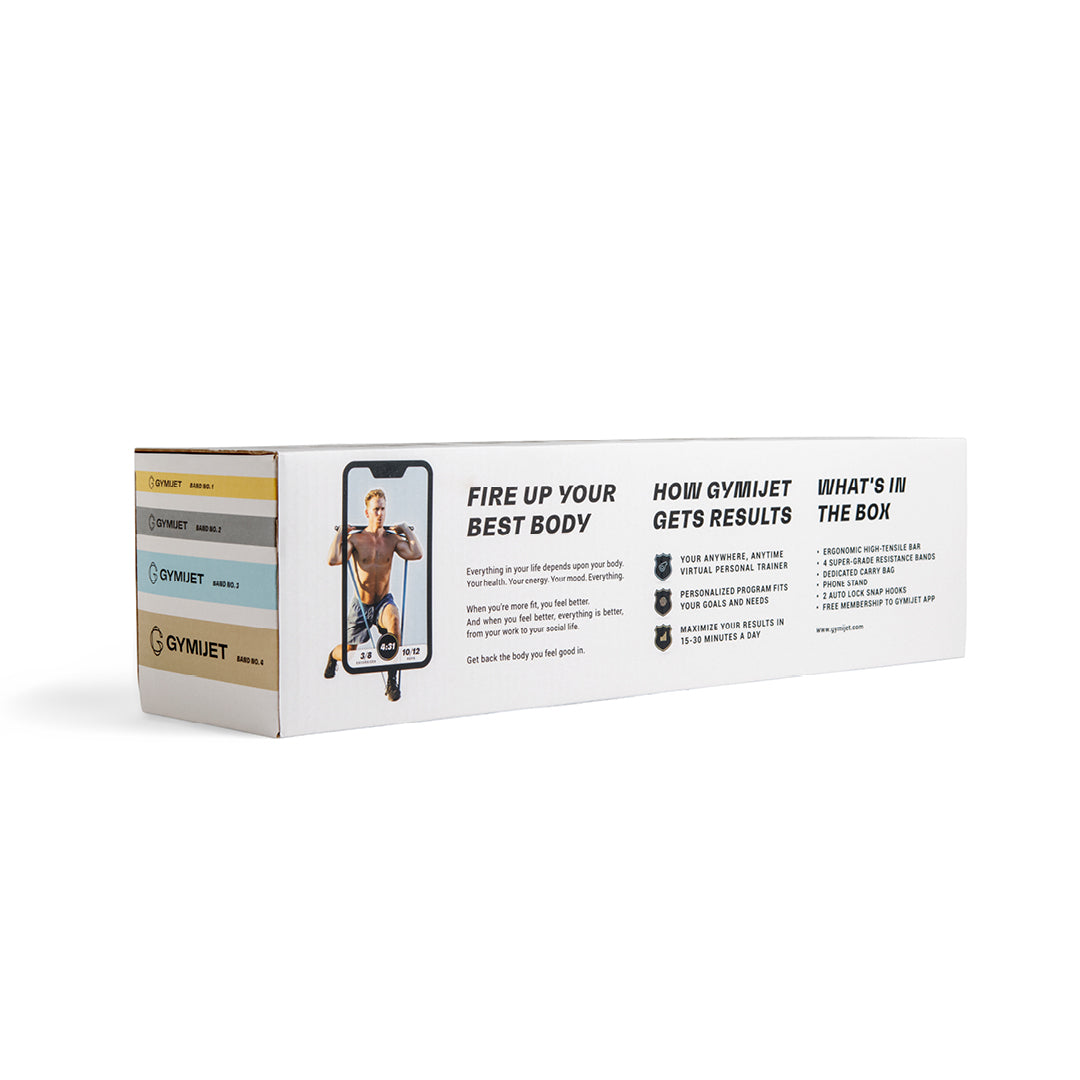
Building trail-ready strength requires progressive resistance that matches your lifestyle. The Gymijet Portable Home Gym Kit delivers a complete resistance training system in a backpack-friendly 6-pound package, making it ideal for home conditioning, hotel workouts during multi-day trips, or even campsite sessions. The AI-powered app counts only properly executed repetitions, ensuring you're building functional strength rather than reinforcing poor movement patterns—crucial when training independently without coaching.
As your strength improves, the progressive resistance automatically adjusts to match your capabilities, mimicking how hiking demands increase as trails get steeper and distances grow longer. Whether you're preparing for your first mountain summit or maintaining your conditioning between adventures, Gymijet provides 15-30 minute workouts that target hiking-specific muscle groups. Similar to how remote workers need flexible solutions that adapt to changing environments, hikers benefit from training systems that are portable and adaptable to various settings.
Expert Tips for Hiking Strength Training
- Resistance band training produces strength gains that are equivalent to those achieved through conventional weight training. A comprehensive meta-analysis found no superiority between elastic resistance and traditional weights for building muscular strength, confirming that portable resistance bands deliver the same muscle-building stimulus as gym equipment across different populations and training protocols.
- Uphill walking increases quadriceps and gluteus maximus activation by 246-310% compared to level ground. Biomechanical research demonstrates that hip and knee extensors work substantially harder during incline walking, with the gluteus maximus and vastus medialis showing dramatic increases in activation—highlighting exactly which muscles hikers must strengthen for optimal uphill performance.
- Walking at a 5-10% incline provides optimal engagement of the glute muscles for functional strength development. Studies confirm that moderate inclines between 5-10 degrees maximize gluteal activation without excessive forward lean that compromises form, making this the ideal training gradient for building hiking-specific posterior chain strength.
- Resistance bands enhance joint mobility and reduce the risk of injury while building strength. Research on university basketball players demonstrated that 5 weeks of elastic resistance training strengthened joints, improved mobility, and increased movement speed—benefits that translate directly to navigating uneven hiking terrain with better stability.
- Incline walking burns 50% more calories at a 5% grade and nearly double at a 10% grade compared to flat surfaces. Metabolic studies show that energy expenditure increases by 22.9% at a 10% gradient and 44.2% at a 16% gradient, confirming that uphill training provides superior conditioning stimulus—and highlighting why hikers need strength to sustain these elevated energy demands.
These evidence-based principles align with how biohackers optimize training by targeting specific adaptations through data-driven programming, rather than relying on generic fitness approaches.
FAQs
Can resistance bands really build enough strength for mountain hiking?
Yes—research confirms resistance bands produce equivalent strength gains to free weights when using progressive resistance protocols.
What muscles matter most for uphill hiking performance?
The quadriceps, gluteus maximus, and calves exhibit the greatest activation increases on inclines, making them primary training targets.
How often should I do strength training for hiking?
Two to three resistance sessions per week, combined with regular trail time, provide optimal strength development without overtraining.
Will portable resistance gear work for experienced hikers?
Absolutely—progressive resistance scales to any fitness level, from beginners building base strength to advanced hikers maintaining peak conditioning.
Is 15 minutes of resistance training enough for hiking preparation?
Fifteen minutes provides foundational work, but 30-minute sessions three times weekly for 60+ days produce superior trail-ready strength adaptations.
Ready to Build Trail-Conquering Strength
Building the leg power, core stability, and muscular endurance to tackle challenging trails can be achieved through consistent resistance training and efficient workouts that target hiking-specific muscle groups for strength and mobility.
Portable resistance gear offers the perfect solution: lightweight equipment that travels anywhere while delivering progressive strength development. Gymijet's AI-powered system takes the guesswork out of programming by assessing your individual capabilities and designing workouts that evolve with your progress, ensuring every training session builds real-world hiking performance.
Start Your AI-Powered Fitness Journey Now and transform how your body handles the mountains ahead.


Reviewed by
Dr. Michele Kong, MD, MBA
Pediatric Critical Care Medecine
Dr. Michele Kong is a Professor and physician scientist who specializes in pediatric intensive care and clinical research on severe respiratory illnesses and sensory integration challenges. She has extensive experience in evidence-based medicine and child wellness, bringing both a scientific and compassionate perspective to the importance of health, movement, and adaptive fitness—core values reflected in Gymijet’s mission.
Beyond her medical and academic career, Dr. Kong is the co-founder of KultureCity, a leading nonprofit dedicated to creating inclusive and sensory-accessible environments worldwide. Her work has earned national recognition for advancing accessibility, community health, and neurodiversity awareness.
Dr. Kong’s multidisciplinary background connects clinical expertise with human-centered innovation. Her insights help make health and fitness more inclusive, data-driven, and sustainable. Her contributions to Gymijet’s content ensure every article aligns with the highest standards of credibility, research integrity, and real-world applicability, allowing readers to be more empowered in pursuing smarter, safer, and more personalized approaches to wellness.