Backpacking Fitness: Exercises to Carry Heavy Loads
Carrying a 30-pound pack over miles of rugged terrain tests your body in ways most gym workouts don't address. The sustained load stresses your legs differently than squats, challenges your core stability beyond planks, and demands shoulder endurance that typical upper-body training rarely develops.
Most backpackers focus exclusively on cardiovascular conditioning, only to discover on day three of their trek that their legs can't handle the cumulative fatigue or their shoulders ache from the weight of their pack. The answer isn't logging more trail miles—it's building functional strength through targeted resistance training that prepares your muscles for the specific demands of load carriage.
The Challenge
Carrying a heavy backpack alters your entire movement pattern. Research shows that as load increases, your stride changes, your trunk leans forward, and specific muscle groups—particularly the quadriceps, gastrocnemius, and erector spinae—work significantly harder than during unloaded walking. Your body compensates for the added mass by increasing knee flexion, adjusting your center of gravity, and demanding more from stabilizing muscles.
Without proper conditioning, these adaptations can lead to rapid fatigue, decreased efficiency, and an increased risk of injury during multi-day expeditions.
Practical Solutions
Effective load carriage training targets three interconnected systems: lower body power to handle the weight, core stability to maintain posture under load, and shoulder endurance to support pack straps for hours. The key distinction is training muscular endurance rather than pure strength—your legs need to perform hundreds of loaded steps, not just lift heavy weights once.
Training principles might include:
- Progressive weighted carries to build load-specific adaptations
- High-repetition resistance work targeting quads, glutes, and core
- Unilateral exercises that challenge balance and stability
- Shoulder and upper back conditioning for pack support
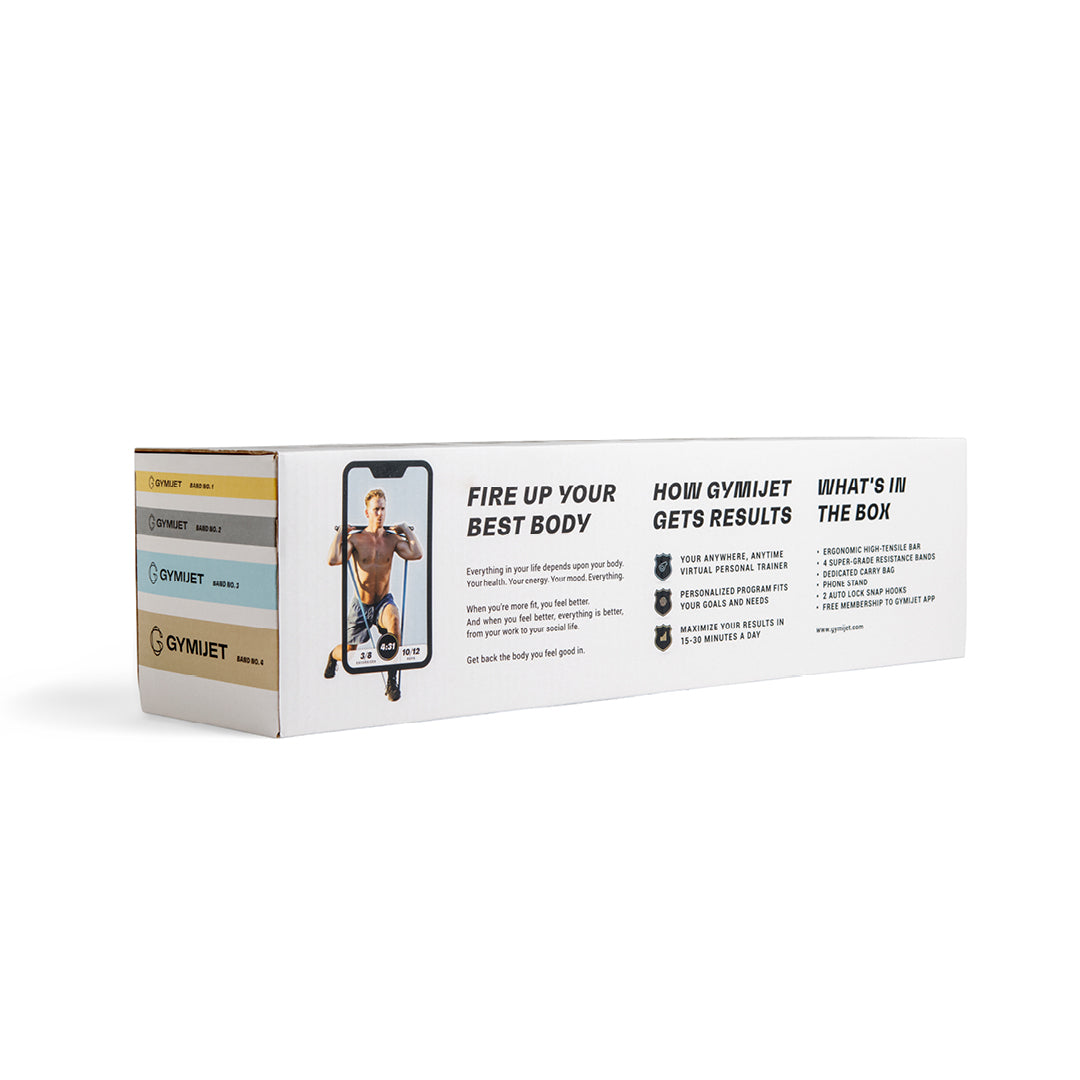
However, generic routines can't account for your current strength levels, injury history, or specific trekking goals. This is where the Gymijet Portable Home Gym Kit becomes invaluable—the AI assessment evaluates your individual capabilities and designs programming that builds the precise adaptations you need. What prepares one backpacker for a 40-pound load might be completely inappropriate for another, which is why personalized training based on your actual movement patterns produces superior results.
How Gymijet Solves This Problem
Building backpacking-specific strength requires progressive resistance that travels as easily as your tent. The Gymijet Portable Home Gym Kit delivers full-body resistance training in a 6-pound package, making it ideal for pre-trip conditioning at home or maintaining strength during extended adventures at campsites. The AI-powered app ensures you're performing movements with proper technique by counting only correctly executed reps—crucial when you're training without a coach present.
As you get stronger, the progressive resistance automatically adjusts to match your improving capabilities, mimicking how your body must adapt to carrying heavier loads over longer distances. Whether you're building base strength three months before a thru-hike or maintaining conditioning between weekend trips, Gymijet provides 15-30 minute workouts that target the exact muscle groups load carriage demands. Similar to how remote workers need portable solutions that accommodate unpredictable schedules, backpackers benefit from training systems that adapt to variable conditions.
Expert Tips for Load Carriage Training
- Combining progressive resistance training with aerobic work produces the largest improvements in load carriage performance. Systematic reviews demonstrate that training programs combining strength and cardiovascular work at least 3 times weekly for 4+ weeks generate effect sizes exceeding 0.8 standard deviations—and adding progressive load-carriage exercise nearly doubles training effects to 1.7 standard deviation improvements.
- Walking with backpack loads over several weeks decreases energy cost through improved efficiency. Research confirms that training with loads results in measurable reductions in metabolic demand, meaning your body learns to carry weight more economically—a critical adaptation for multi-day treks where energy conservation determines success.
- Heavy backpacks significantly increase activation of the quadriceps and gastrocnemius muscles during walking. Biomechanical studies show these muscle groups work substantially harder under load. At the same time, erector spinae activity increases once loads exceed 30-40kg—highlighting why targeted resistance training for these specific muscles improves load carriage capability.
- Muscular endurance training with high reps and light-to-moderate resistance outperforms pure strength work for backpacking. Studies emphasize that hikers benefit most from exercises targeting endurance rather than maximal strength, as sustained performance over hours matters more than peak force output during trail activities.
- Training specificity matters: practicing loaded carries produces superior adaptations compared to general fitness work. Research demonstrates that progressive load-carriage exercise, when incorporated into training programs, generates significantly larger performance improvements than aerobic or resistance training alone, emphasizing the importance of activity-specific conditioning.
These evidence-based training principles align with how biohackers optimize performance by using data-driven approaches that target specific adaptations rather than relying on generic programming.
FAQs
How much weight should I train with before a backpacking trip?
Start with 15-20% of your planned pack weight and progressively increase over 8-12 weeks, allowing your body to adapt gradually to heavier loads.
Can resistance bands really prepare me for carrying heavy packs?
Absolutely—resistance training builds the muscular endurance and strength patterns needed for load carriage, and progressive resistance effectively mimics increasing pack weights.
What's more important: cardiovascular fitness or strength training for backpacking?
Both matter significantly, but research shows the combination produces far superior load carriage performance than either approach alone.
How long should I start training for a trek before I begin?
Begin at least 8 weeks before your trip, focusing on building strength first, then adding progressive load-carriage practice in the final 2-3 weeks.
Will 15-minute workouts be enough for multi-day backpacking preparation?
Fifteen minutes daily provides foundational conditioning, but optimal results require 30-minute sessions at least 3 times weekly for 60+ days before your trek.
Build Your Strength With Gymijet
Building the strength, endurance, and stability to carry heavy loads over multiple days comfortably doesn't require access to a gym or complex equipment—just consistent, progressive resistance training that targets the specific demands of load carriage. Whether you're preparing for your first overnight trip or training for a challenging thru-hike, the right approach combines muscular conditioning with gradual exposure to weighted carries.
Gymijet's AI-powered portable gym delivers personalized programming that evolves with your capabilities, ensuring every training session builds real-world backpacking performance. Shop the Portable AI Gym Today and transform how your body handles the trail ahead.


Reviewed by
Dr. Michele Kong, MD, MBA
Pediatric Critical Care Medecine
Dr. Michele Kong is a Professor and physician scientist who specializes in pediatric intensive care and clinical research on severe respiratory illnesses and sensory integration challenges. She has extensive experience in evidence-based medicine and child wellness, bringing both a scientific and compassionate perspective to the importance of health, movement, and adaptive fitness—core values reflected in Gymijet’s mission.
Beyond her medical and academic career, Dr. Kong is the co-founder of KultureCity, a leading nonprofit dedicated to creating inclusive and sensory-accessible environments worldwide. Her work has earned national recognition for advancing accessibility, community health, and neurodiversity awareness.
Dr. Kong’s multidisciplinary background connects clinical expertise with human-centered innovation. Her insights help make health and fitness more inclusive, data-driven, and sustainable. Her contributions to Gymijet’s content ensure every article aligns with the highest standards of credibility, research integrity, and real-world applicability, allowing readers to be more empowered in pursuing smarter, safer, and more personalized approaches to wellness.