Travel-Friendly Workouts for Docked or Anchored Days
Life on the water offers incredible freedom, but maintaining your fitness routine while docked or anchored presents unique challenges. Limited deck space, unpredictable weather, and the constant motion of the boat can make traditional workouts nearly impossible. Whether you're a liveaboard sailor, weekend cruiser, or long-distance voyager, staying active is essential for both physical health and mental well-being during extended periods at sea.
The good news? You don't need a gym or bulky equipment to maintain strength and fitness onboard. With the right approach and compact equipment, you can perform effective full-body workouts in the limited space of your cabin or cockpit, keeping you healthy and energized for your next adventure.
Key Takeaways
- You can maintain a complete strength and mobility routine aboard your boat using compact equipment and bodyweight exercises that fit into limited spaces.
- The natural motion of the boat enhances core stability and balance, turning each movement into functional, full-body training.
- Resistance bands and Gymijet’s portable AI-powered gym make it easy to perform over 100 exercises without bulky gear or a dedicated gym space.
- Combining resistance training with everyday boat tasks improves both fitness and sailing performance while maximizing time efficiency.
- Gymijet’s durable, marine-ready design ensures your workouts stay safe, effective, and adaptable, no matter where you anchor.
The Challenge: Fitness Barriers for Boaters
Boaters face distinct obstacles when it comes to maintaining a consistent workout routine. The confined spaces below deck and limited storage capacity make traditional gym equipment impractical, while the boat's movement adds an extra layer of difficulty to balance-dependent exercises. Marinas rarely offer fitness facilities, and anchoring in remote locations eliminates access to land-based gyms.
Weather conditions further complicate matters. High winds, rain, or extreme heat can make outdoor exercise uncomfortable or unsafe. Many sailors and cruisers spend hours in sedentary positions while navigating or relaxing, which can lead to muscle stiffness, reduced flexibility, and decreased cardiovascular fitness. Research shows that inactive adults experience 3% to 8% muscle loss per decade, making consistent exercise crucial for those spending extended periods aboard the vessel.
Practical Solutions: Effective Workouts for Limited Spaces
Bodyweight exercises form the foundation of any boat-friendly fitness routine. Push-ups, squats, lunges, and planks require zero equipment and can be modified to match your fitness level. The natural instability of a floating platform actually enhances core engagement, turning every movement into a balance challenge that strengthens stabilizer muscles.
Essential Boat-Friendly Exercises:
- Resistance Band Rows – Anchor bands to a sturdy cleat or rail for upper body pulling movements
- Deck Squats – Use cockpit benches or cabin steps for box squats and step-ups
- Stability Planks – The boat's subtle motion intensifies core work during holds
- Resistance Band Chest Press – Loop bands around a mast or stanchion for pushing exercises
- Bulgarian Split Squats – Elevate your rear foot on a cockpit seat for single-leg strength
For optimal results, aim for at least 15-minute sessions, though 30 minutes daily will deliver more substantial improvements. Research indicates that the benefits of resistance training can be achieved in two 15- to 20-minute training sessions per week, making this approach ideal for busy sailing schedules.
How Gymijet Solves This Problem
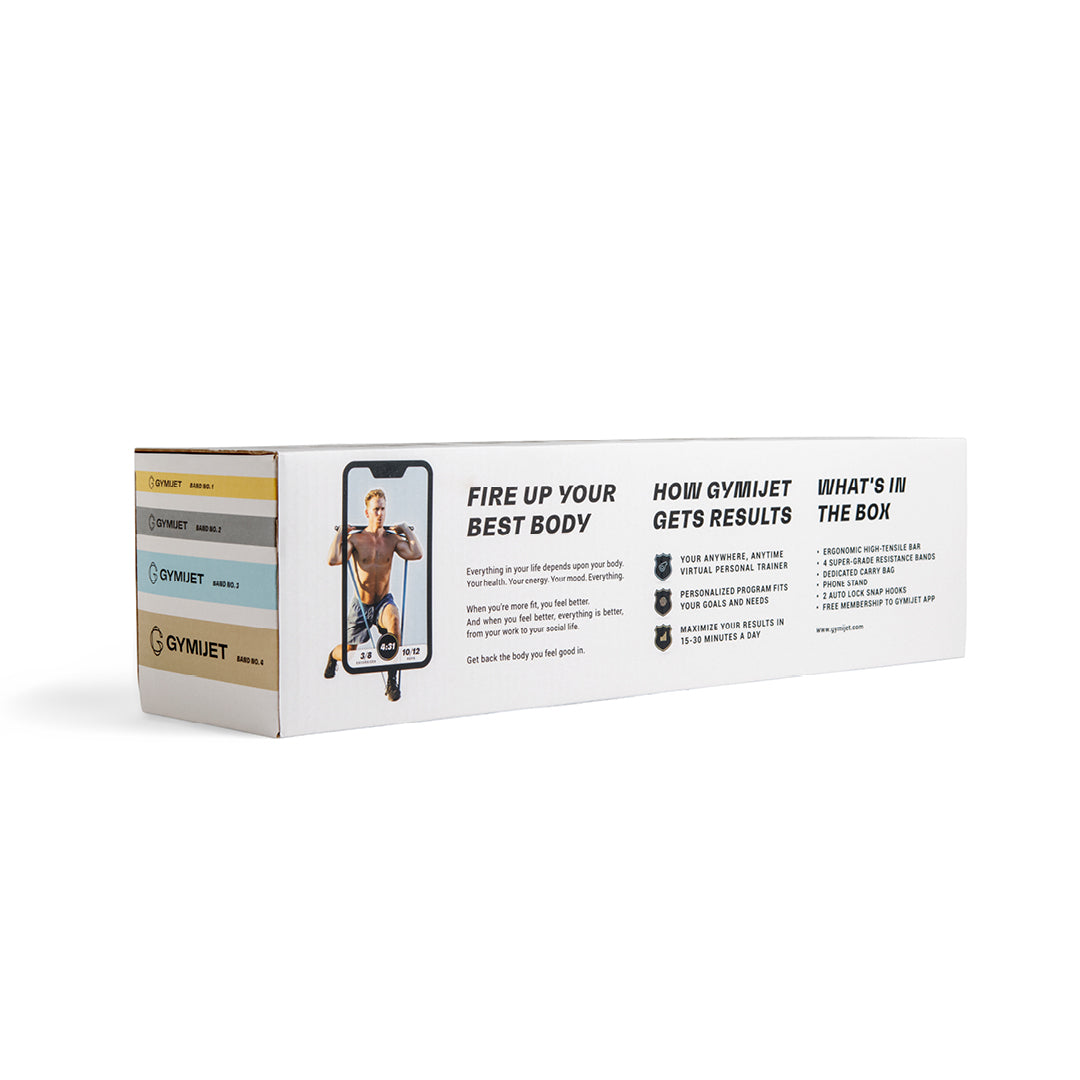
Gymijet transforms your boat into a complete fitness center with its portable gym system designed specifically for space-constrained environments. The entire kit weighs just 6 pounds and packs into a compact carrying bag that fits easily in a small locker or under a berth, addressing the critical storage limitations that plague boaters.
The AI-powered app ensures every repetition counts by recognizing proper movement patterns and automatically tracking your progress. Unlike traditional equipment that requires multiple pieces for different exercises, Gymijet's resistance band system provides progressive resistance for over 100 exercises using a single compact setup. The equipment is also compact, making it ideal for use in limited spaces on boats.
Most importantly, Gymijet adapts to your available space and fitness level. Whether you're working out in a cramped V-berth or on the open deck at anchor, the system delivers effective workouts that build strength, improve mobility, and enhance overall fitness. Many boaters also benefit from Gymijet's approach to small-space fitness, which translates perfectly to marine environments.
Expert Tips: Science-Backed Strategies for Boat Fitness
1. Prioritize Frequency Over Duration
Exercise physiology research suggests that beginners should train 2 to 3 days per week, with consistent scheduling being more important than the duration of each workout. For boaters, establishing a routine tied to daily activities, like exercising after morning watch or before sunset, creates sustainable habits. Studies published in Sports Medicine - Open confirm that training frequency significantly impacts strength development, with regular shorter sessions producing better long-term results than sporadic intensive workouts.
2. Leverage Resistance Training for Maximum Benefits
Ten weeks of resistance training can increase lean weight by 1.4 kg, increase resting metabolic rate by 7%, and reduce fat weight by 1.8 kg. For boaters with limited cardio options, resistance work becomes even more critical. The American Heart Association notes that resistance training provides cardiovascular benefits beyond traditional aerobic exercise, improving blood pressure, cholesterol levels, and insulin sensitivity—all particularly valuable for the sedentary aspects of sailing life.
3. Embrace Progressive Overload Principles
Gradually increasing workout difficulty ensures continued improvement without requiring more equipment. Proper program design, incorporating progressive overload, variation, and specificity, is essential to maximize the benefits of resistance training. Start with basic resistance levels and incrementally add intensity through increased repetitions, slower tempo, or reduced rest periods. Research in the Journal of Strength and Conditioning Research emphasizes that systematic progression prevents plateaus and maintains motivation.
4. Maintain Consistency for Optimal Results
Training twice a week promotes superior hypertrophic outcomes compared to training once a week. For liveaboards and cruisers, this translates to finding windows between passages, weather systems, and boat maintenance. Even during challenging conditions, maintaining at least two weekly sessions preserves fitness gains. Studies published in Sports Medicine demonstrate that consistent training frequency matters more than individual session intensity for long-term muscle development and strength retention.
5. Combine Resistance and Functional Movement
The unique environment aboard boats provides natural opportunities for functional fitness. Resistance training combined with aerobic training yields optimal health benefits versus performing either exercise exclusively. Integrate resistance work with boat-related activities—use resistance bands before line handling, perform squats while checking equipment, or do upper body exercises before climbing the mast. This approach, supported by research in Exercise, Sport, and Movement, maximizes time efficiency while building practical strength for sailing tasks.
Frequently Asked Questions
Can I get a full-body workout on a small boat?
Absolutely—resistance bands and bodyweight exercises provide complete muscle engagement in minimal space, with the boat's natural motion adding beneficial instability training.
How do I secure exercise equipment in rough conditions?
Use marine-grade carabiners to attach resistance bands to fixed points, such as cleats, stanchions, or grab rails. Store all equipment in sealed, waterproof bags when not in use.
What if I get seasick during workouts?
Start with gentle mobility exercises on calmer days, gradually building tolerance; many boaters find that regular movement actually reduces seasickness symptoms over time.
How much space do I need for an effective workout?
Most effective exercises require just 4-6 feet of clear deck or cabin space—about the same area needed to extend your arms while standing fully.
Will regular exercise help with sailing performance?
Yes—improved core strength, upper body power, and flexibility directly enhance your ability to handle lines, raise sails, and maintain balance in rough seas.
Stay Fit Anywhere With Gymijet
Staying fit while living or traveling on a boat doesn't require sacrificing limited space or compromising on workout quality. With strategic exercise selection, compact equipment, and consistent effort, you can maintain and even improve your strength, mobility, and overall health from anywhere your boat takes you. The unique challenges of marine fitness actually provide opportunities to develop functional strength that directly translates to better sailing performance and safer boat handling.
Gymijet's portable, AI-powered fitness system is specifically designed for people like you—those who refuse to let limited space compromise their health goals. Whether you're cruising coastal waters or crossing oceans, your fitness routine can travel with you, adapting to your environment and keeping you strong for every adventure.
Ready to transform your boat into your personal gym? Shop the Portable AI Gym Today and discover how easy it is to stay fit on the water. Your body—and your next passage—will thank you.


Reviewed by
Dr. Michele Kong, MD, MBA
Pediatric Critical Care Medecine
Dr. Michele Kong is a Professor and physician scientist who specializes in pediatric intensive care and clinical research on severe respiratory illnesses and sensory integration challenges. She has extensive experience in evidence-based medicine and child wellness, bringing both a scientific and compassionate perspective to the importance of health, movement, and adaptive fitness—core values reflected in Gymijet’s mission.
Beyond her medical and academic career, Dr. Kong is the co-founder of KultureCity, a leading nonprofit dedicated to creating inclusive and sensory-accessible environments worldwide. Her work has earned national recognition for advancing accessibility, community health, and neurodiversity awareness.
Dr. Kong’s multidisciplinary background connects clinical expertise with human-centered innovation. Her insights help make health and fitness more inclusive, data-driven, and sustainable. Her contributions to Gymijet’s content ensure every article aligns with the highest standards of credibility, research integrity, and real-world applicability, allowing readers to be more empowered in pursuing smarter, safer, and more personalized approaches to wellness.