Fitness Routines for Boaters Without a Gym
Living aboard a boat or embarking on extended cruises shouldn't mean abandoning your fitness goals. The maritime lifestyle presents unique obstacles—cramped quarters, constant movement, and zero access to traditional gym facilities—but these constraints don't have to derail your training. Whether you're a weekend sailor or a full-time liveaboard, maintaining physical fitness is essential not just for health, but for the physical demands of handling lines, raising sails, and navigating rough conditions.
The key to success lies in structured routines specifically designed for limited space and equipment. With portable fitness gear and smart programming, you can build comprehensive workout routines that develop strength, balance, and endurance—all critical attributes for life on the water. This guide provides complete, actionable fitness routines you can implement immediately, no gym membership required.
Key Takeaways
- You can achieve full-body strength, balance, and endurance training aboard a boat using structured routines that require minimal space and equipment.
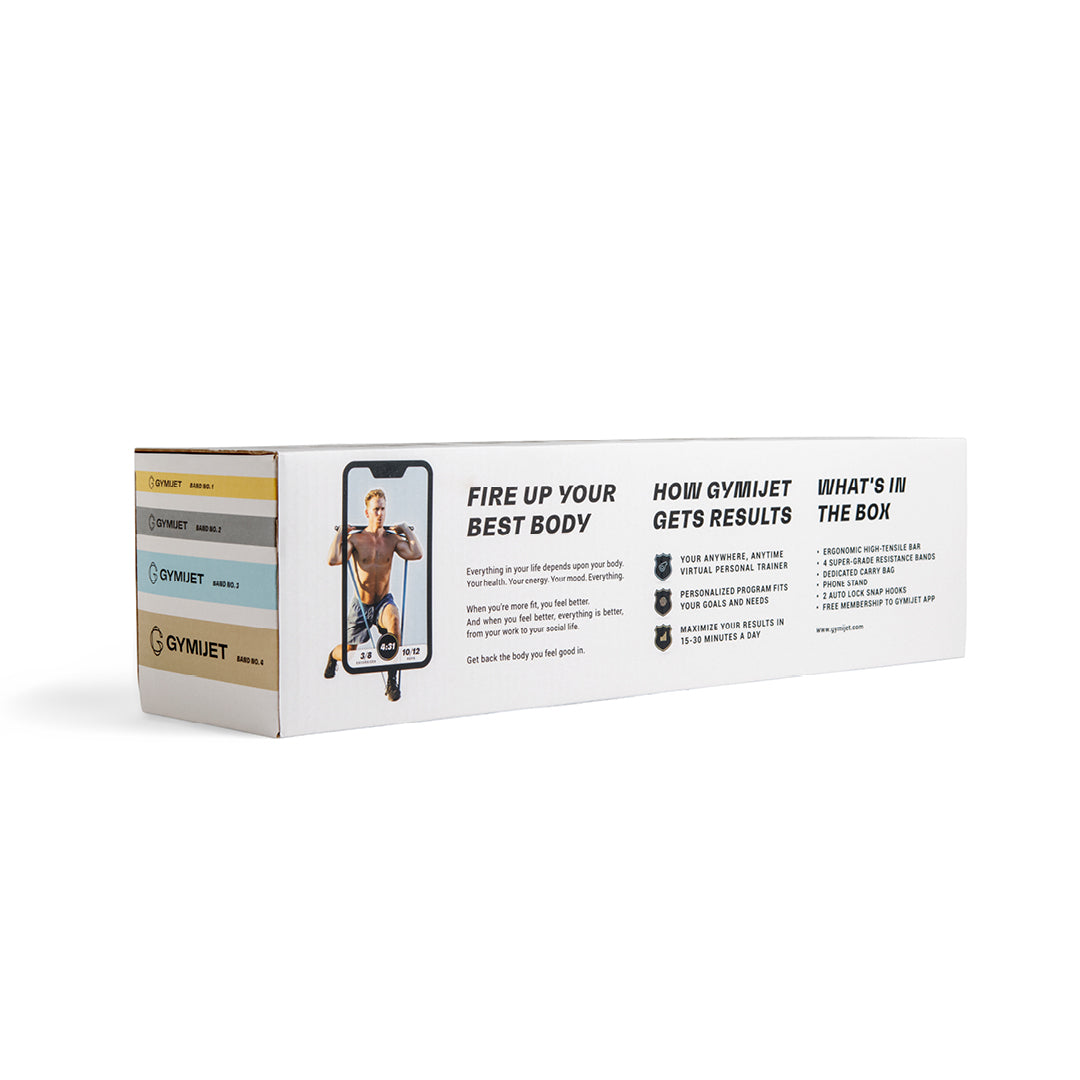
- Resistance bands and Gymijet’s compact AI-powered gym system replace bulky weights while providing progressive resistance for over 100 exercises.
- Consistency and proper recovery are more important than intensity; three 30-minute sessions per week deliver measurable improvements in strength and body composition.
- Balance training enhances stability, safety, and efficiency on deck, directly improving performance in sailing and daily onboard movement.
- Progressive overload and adaptive AI programming help prevent fitness plateaus, ensuring continuous improvement even in confined environments.
- Gymijet’s durable, space-saving design and offline app make it the perfect fitness solution for liveaboard sailors and long-term cruisers.
The Challenge: Why Traditional Workout Plans Fail Boaters
Most fitness programs assume unlimited space and access to equipment racks, machines, and open floor areas. For boaters, this assumption collapses immediately—a typical V-berth offers barely six feet of usable space, while cabin headroom rarely exceeds six feet. Weather creates another barrier, as high winds, rain, or extreme temperatures can make deck workouts impossible for days at a stretch.
The sedentary nature of long passages compounds these challenges. Hours spent at the helm or below deck navigating lead to muscle stiffness, reduced cardiovascular capacity, and weakened core strength. Research indicates that inactive adults lose 3% to 8% of their muscle mass per decade, accompanied by decreases in metabolic rate and an increase in fat accumulation. Without structured exercise routines, these age-related changes accelerate dramatically in the confined environment of a boat.
Practical Solutions: Complete Workout Routines for Boaters
Full-Body Strength Routine (30 Minutes, 3x Weekly)
This routine targets all major muscle groups using minimal equipment. Full-body resistance training promotes greater fat mass loss than split routines while building functional strength for sailing tasks.
Sample Workout Structure:
Warm-Up Phase:
- Dynamic movements tailored to your workout focus
- Mobility exercises based on your flexibility assessment
- Activation drills specific to the muscle groups you'll be training
Main Workout: Your personalized routine might include exercises like:
- Resistance Band Rows
- Resistance Band Chest Press
- Bulgarian Split Squats
- Resistance Band Overhead Press
- Core stabilization work
- Targeted isolation movements
The Gymijet Difference: Unlike generic workout plans, your exact exercises, sets, and reps are determined by:
- Your initial fitness assessment results
- The goals you selected in your survey
- Your available equipment and space
- Your progress and performance data
Every workout is uniquely calibrated to challenge you at the right level—not too easy, not overwhelming, but perfectly matched to help you progress toward your specific goals.
Weekly Schedule Framework
Monday: Full-Body Strength Tuesday: Rest or light stretching Wednesday: Balance and Core Thursday: Rest Friday: Full-Body Strength Saturday: Endurance and Mobility Sunday: Balance and Core OR Rest
Adjust according to weather conditions, passages, and boat activities. The beauty of structured routines is their flexibility—missing one session doesn't derail progress when you follow a consistent weekly pattern.
How Gymijet Solves This Problem
Gymijet eliminates the guesswork from boat-based fitness with its AI-powered system that adapts routines to your environment and progress. The compact resistance band kit replaces an entire gym while weighing just 6 pounds and storing in a space smaller than a galley cabinet—addressing the critical storage constraints that plague boaters.
The mobile app tracks every repetition automatically by recognizing proper movement patterns, ensuring you're getting the maximum benefit from each workout without wasting effort on incomplete reps. This intelligent rep counting means a 30-minute session delivers results that might take 45 minutes with traditional training, making it perfect for boaters juggling watch schedules, maintenance, and cruising logistics.
For cruisers who struggle with limited storage space, Gymijet's all-in-one design provides progressive resistance for over 100 exercises using a single compact system. The equipment withstands marine conditions, and the app works offline—essential when you're anchored miles from cell service. Most importantly, Gymijet's adaptive programming evolves your workouts automatically as you gain strength, eliminating the need to research new routines or purchase additional equipment constantly.
Expert Tips: Maximizing Results with Structured Training
1. Prioritize Full-Body Training Over Split Routines
Research demonstrates that full-body resistance training elicits greater whole-body and regional fat loss compared to split-body routines in trained individuals. Studies published in the European Journal of Sport Science found that training muscle groups multiple times weekly produced superior body composition changes than traditional bodybuilding splits. For boaters with limited training time, full-body routines deliver maximum results per session while accommodating unpredictable weather and boat schedules.
2. Implement Progressive Overload Systematically
Both split and full-body workout routines promote similar gains in muscle strength and thickness when volume and intensity remain equal. According to research in PMC's systematic analysis, the key differentiator is progressive overload—gradually increasing resistance, repetitions, or workout difficulty over time. Track your workouts meticulously and aim to improve one variable every 1-2 weeks, whether adding resistance band tension, increasing reps, or decreasing rest periods.
3. Balance Training Enhances Maritime Performance
Balance training improves proxies of static and dynamic steady-state balance in just 11-12 weeks when performed three times weekly. Research published by PMC on balance training confirms that 31-45 minute sessions produce the largest improvements in postural control and stability. For boaters, enhanced balance translates directly to better deck safety, improved heavy-weather handling, and reduced fatigue during long passages as your body adapts to constant motion.
4. Maintain Minimum Effective Training Volume
Resistance training reduces body fat percentage by 1.46%, fat mass by 0.55 kg, and visceral fat significantly in healthy adults according to a meta-analysis in Sports Medicine - BMC. The research demonstrates that training protocols lasting at least four weeks with consistent frequency produce measurable changes in body composition. Aim for at least 30 minutes per session, three times weekly as your baseline, with the understanding that consistency matters more than perfection when dealing with unpredictable marine conditions.
5. Adapt Training to Recovery Capacity
When comparing total body versus split routines in trained individuals, the Journal of Strength & Conditioning Research found that both produce similar strength and hypertrophy gains over 10 weeks when volume is matched. The critical factor is adequate recovery between sessions. For boaters managing physical boat work alongside structured training, ensure 48-72 hours of rest between intense sessions targeting the same muscle groups, allowing for full recovery while maintaining a consistent training frequency.
Frequently Asked Questions
How do I maintain my routine during multi-day passages?
Focus on 15-20 minute maintenance sessions using resistance bands and bodyweight exercises in the cockpit during off-watch periods to preserve strength without exhausting yourself.
Can I build muscle with only resistance bands?
Yes—research confirms that resistance training with progressive overload builds lean muscle regardless of equipment type, provided you consistently challenge your muscles with adequate resistance and volume.
What if the boat motion makes balance exercises too difficult?
Start with seated or lying exercises during rough conditions, then progress to standing movements as the seas calm. The natural instability provides excellent balance training once you become accustomed to it.
How long will it take to see results from these routines?
Expect noticeable strength improvements within 4-6 weeks and visible changes in body composition after 8-10 weeks of consistent training, at least three times a week.
Should I modify routines for different sailing conditions?
Absolutely—on calm days at anchor, perform full routines; during passages, focus on maintenance work; in rough weather, prioritize core and balance exercises that use the boat's movement.
Workout Anywhere With Smart Fitness
Structured fitness routines transform boat-based training from haphazard exercise attempts into systematic programs that deliver real results. By following proven workout frameworks specifically designed for limited space and equipment, boaters can maintain—and even improve—their strength, balance, and endurance regardless of location or weather conditions. The combination of full-body resistance training, targeted balance work, and strategic mobility routines addresses every aspect of physical fitness while respecting the unique constraints of maritime life.
Gymijet's portable, AI-powered system makes these routines even more effective by automatically tracking progress, adjusting resistance, and ensuring every rep counts. You get structured programming that evolves with your fitness level, all packaged in equipment that fits in a single locker and works anywhere your boat takes you.
Ready to establish your permanent boat-based fitness routine? Shop the Portable AI Gym Today and discover how intelligent training transforms your onboard workouts. No more guessing, no more excuses—just consistent results wherever you drop anchor.


Reviewed by
Dr. Michele Kong, MD, MBA
Pediatric Critical Care Medecine
Dr. Michele Kong is a Professor and physician scientist who specializes in pediatric intensive care and clinical research on severe respiratory illnesses and sensory integration challenges. She has extensive experience in evidence-based medicine and child wellness, bringing both a scientific and compassionate perspective to the importance of health, movement, and adaptive fitness—core values reflected in Gymijet’s mission.
Beyond her medical and academic career, Dr. Kong is the co-founder of KultureCity, a leading nonprofit dedicated to creating inclusive and sensory-accessible environments worldwide. Her work has earned national recognition for advancing accessibility, community health, and neurodiversity awareness.
Dr. Kong’s multidisciplinary background connects clinical expertise with human-centered innovation. Her insights help make health and fitness more inclusive, data-driven, and sustainable. Her contributions to Gymijet’s content ensure every article aligns with the highest standards of credibility, research integrity, and real-world applicability, allowing readers to be more empowered in pursuing smarter, safer, and more personalized approaches to wellness.